





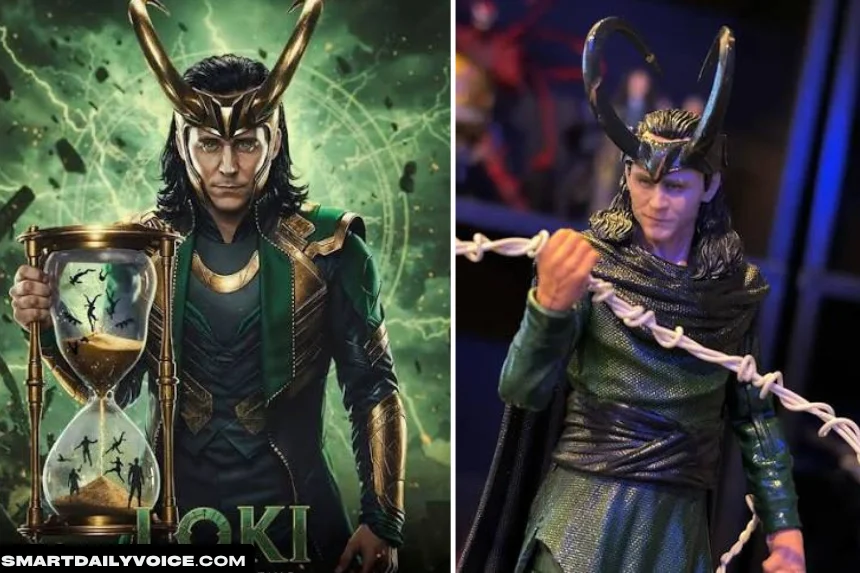
God of Stories Loki is a transformed version of Marvel’s famous trickster who refuses to remain trapped in the role of an inevitable villain. The title originated in Marvel Comics, where Loki realised that lies are also stories—and that stories can be rewritten. Rather than allowing his past or a predicted future to define him, Loki chose to become the author of his own identity.
The Marvel Cinematic Universe follows a related but separate path. At the end of Loki Season 2, Tom Hiddleston’s character saves the branching timelines and takes a throne beyond ordinary time. Fans commonly call this form God of Stories Loki, although Marvel’s official material has generally used the name “God Loki” for the finale version.
This guide explains the comic origin, powers, limitations and MCU future of God of Stories Loki.
Warning: major spoilers follow for Loki: Agent of Asgard and Loki Season 2.
Who Is God of Stories Loki?
God of Stories Loki is the identity Loki adopts in Marvel’s Earth-616 comic continuity after rejecting the belief that he must eventually become evil again.
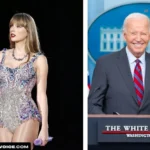
The transformation occurs during Al Ewing and Lee Garbett’s Loki: Agent of Asgard. Loki has spent the series trying to escape the crimes of his former self, particularly the destruction of the innocent Kid Loki. When an older version known as King Loki attempts to force him back into his traditional villainous role, Loki finds another path: he stops being defined by lies and becomes the God of Stories.
The title represents more than a power upgrade. It marks Loki’s decision to control the meaning of his life instead of repeating a story written by his past, Asgard or Marvel’s traditional hero-versus-villain cycle.
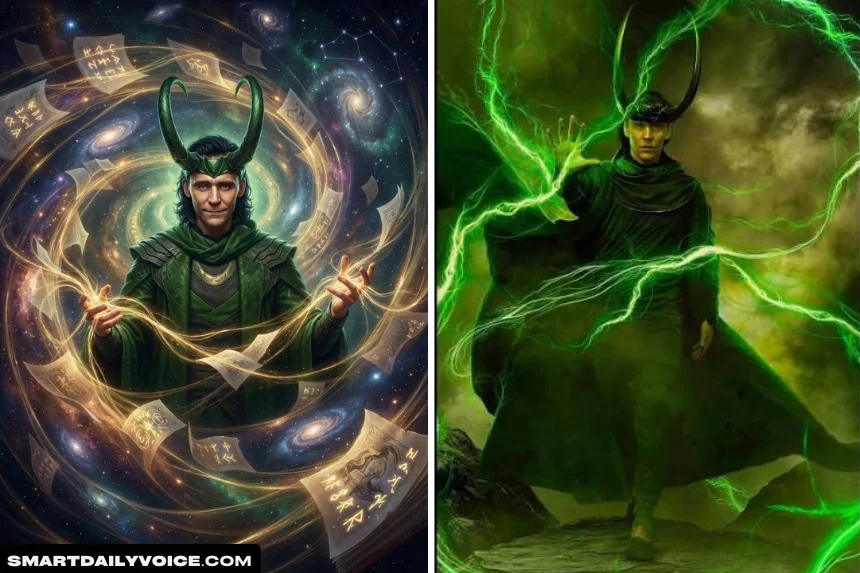
How Loki Became the God of Stories in Marvel Comics
The death and rebirth of the original Loki
Marvel’s older Loki died during the events of Siege. He was later reborn as Kid Loki, a younger incarnation who did not carry the same memories or malicious personality.
Kid Loki genuinely tried to become a better person, but an echo of the old Loki survived in the form of Ikol. Ikol manipulated events until Kid Loki sacrificed himself, allowing the older personality to occupy his body. The resulting Loki was neither completely Kid Loki nor simply the original villain. He carried the old Loki’s mind together with guilt over what had happened.
Loki becomes an Agent of Asgard
Hoping to erase his past crimes, the new Loki performed secret missions for the All-Mother, the rulers of Asgard at that time. Each successful mission was supposed to remove one of the crimes recorded in Asgard’s history.
The arrangement appeared to offer Loki redemption, but it also kept him trapped. He remained dependent on other people deciding whether he was trustworthy, heroic or destined to become a villain again.
The truth about Kid Loki is exposed
In Loki: Agent of Asgard #10, Loki is forced to confront the truth about Kid Loki. His friends and family learn that the person they trusted had taken the younger Loki’s life and identity.
The revelation leaves Loki rejected by Asgard and emotionally vulnerable to King Loki, an older version from a ruined future. King Loki believes that every attempt at redemption is pointless because Loki will eventually return to villainy.
Loki rejects his predicted future
King Loki tries to make his younger self accept the role of the hated villain. Loki instead recognises that the future is not fixed because King Loki does not remember Verity Willis, Loki’s friend and a living detector of lies.
That missing detail proves that events have already changed. Loki therefore rejects the two options presented to him—returning to evil or allowing his identity to be destroyed—and creates a third possibility.
In Loki: Agent of Asgard #13, Loki declares that lies are stories and reinvents himself as the God of Stories. The issue was published on April 15, 2015.
What Does “God of Stories” Mean?
The name does not simply mean that Loki becomes the god of books, fiction or storytelling. It represents control over identity, possibility and the narratives that shape reality.
Writer Al Ewing explained that he wanted Loki’s new role to be more balanced than the God of Lies. Lies and fiction are closely related, but a story does not have to be malicious. It can deceive, entertain, inspire, warn or reveal a deeper truth. The change makes Loki a more neutral and unpredictable figure rather than a conventional hero or villain.
Three ideas define the title:
- Loki can reject an assigned role. His past no longer guarantees that he must become the same villain again.
- Stories can create possibilities. Loki uses narrative, magic and interpretation to produce outcomes that previously appeared impossible.
- Identity can change. God of Stories Loki treats the self as something that can be rewritten rather than something permanently fixed.
The concept is partly literal within Marvel’s magical universe, but it is also a statement about Loki’s character development.
God of Stories Loki’s Powers
Marvel has not published a precise list separating every God of Stories ability from Loki’s existing Asgardian magic. The comics present the title as a metaphysical role rather than a fixed collection of superpowers.
| Power or ability | What it means |
|---|---|
| Narrative awareness | Loki recognises how roles, prophecies and repeating patterns influence events. |
| Self-reinvention | He can reject an expected identity and establish a different version of himself. |
| Story-based magic | Loki can use stories, symbols and belief as part of his supernatural power. |
| Fate disruption | His transformation creates a future different from the one King Loki remembers. |
| Survival beyond the Multiverse | Loki and Verity remain conscious in the white void after the final incursion. |
| Reality-altering sorcery | He retains Loki’s established magical abilities, including transformation, illusion and enchantment. |
| Asgardian physiology | Loki continues to possess exceptional durability, longevity and physical strength. |
| The story sceptre | Loki places King Loki inside his sceptre as a reminder of the person he could still become. |
After his transformation, Loki helps protect Asgard, survives the destruction surrounding the final incursion and confronts Those Who Sit Above in Shadow—entities connected to the repeating cycles of Asgard’s destruction and rebirth. He ultimately refuses to surrender Asgard’s stories to them.
Can God of Stories Loki rewrite reality?
He can influence reality through stories and magic, but he has not been shown casually rewriting the entire Marvel Universe without limits.
His most important achievement is changing a supposedly inevitable future. That does not necessarily mean he can invent any outcome instantly, erase any enemy or control every character’s decisions.
God of Stories Loki is therefore better understood as a powerful narrative magician who can recognise and alter the roles governing events—not as an all-powerful author with unrestricted control over Marvel continuity.
Is God of Stories Loki Omnipotent?
No official Marvel source describes God of Stories Loki as omnipotent.
He possesses unusual influence over fate, identity and narrative structures, but he can still face opposition, uncertainty and consequences. Al Ewing describes this Loki as a neutral and chaotic figure who can function as both Thor’s ally and enemy. That continuing uncertainty would have little meaning if Loki could control every event without resistance.
Claims that he automatically exists above every cosmic entity or can defeat any Marvel character usually rely on fan power scaling rather than a clearly established comic rule.
His strength depends heavily on the type of conflict:
- In a straightforward physical fight, characters such as Thor may possess greater raw strength.
- In a magical or conceptual conflict involving fate, identity or stories, Loki may have the greater advantage.
- Against the highest cosmic powers, the outcome depends on the story and the specific version of each character.
Is MCU Loki the God of Stories?
MCU Loki experiences a transformation that closely resembles the comic concept, but the two versions are not identical.
In the Loki Season 2 finale, Loki discovers that destroying the Temporal Loom is not enough to save the branching timelines. He uses his magic to revive the dying branches, carries them beyond the TVA and takes a throne where he can keep the timelines alive. Marvel’s official costume feature describes him breaking and then saving the timelines before ascending to the throne.
The final arrangement resembles a vast cosmic tree, visually connecting Loki with Yggdrasil, the tree traditionally associated with the Nine Realms.
However, no character in the episode formally calls him the God of Stories. Marvel’s official article about the finale costume uses the term God Loki, while the Disney+ page for the Loki Season 2 finale says he discovers the true meaning of his “glorious purpose.”
Calling the MCU version God of Stories Loki is therefore a reasonable interpretation, but it should not be treated as confirmation that he has every ability possessed by his comic counterpart.
Comic God of Stories Loki vs MCU Loki
| Feature | Marvel Comics Loki | MCU Loki |
|---|---|---|
| Transformation | Occurs in Loki: Agent of Asgard #13 | Occurs during the Season 2 finale |
| Main conflict | Escaping his predetermined role as a villain | Saving his friends and the branching timelines |
| Meaning of the title | Becoming the author of his own identity and story | Accepting responsibility for keeping the Multiverse alive |
| Relationship with time | Changes a future that appeared inevitable | Learns to control time-slipping and act outside normal time |
| Central symbol | Stories, identity and the narrative cycle | A throne surrounded by tree-like timeline branches |
| Official name | God of Stories | Usually described officially as God Loki |
| Primary sacrifice | Rejects his former identity and predicted future | Gives up a normal life with his friends |
| Known responsibility | Protecting and shaping stories | Sustaining the branching timelines |
Both versions reject selfish rulership. Earlier incarnations of Loki wanted a throne because it represented status and control. MCU Loki finally receives a throne only after he stops wanting power for its own sake and accepts it as a burden.
Why Does Loki Hold the Timelines?
Loki holds the timelines because they begin dying after he destroys the Temporal Loom.
The Loom had been designed to process a limited number of timeline branches and protect the Sacred Timeline. As the Multiverse expanded, the structure could not accommodate infinite branches. Loki eventually realises that repeatedly repairing or enlarging it will not solve the underlying problem.
He destroys the Loom, revives the branches with his magic and physically carries them to his throne. His continued presence appears necessary to keep the branching timelines alive, although the finale does not provide a technical explanation of every part of the process.
This is an important difference from simply ruling the Multiverse. Loki does not appear to be controlling every choice inside each reality. He is protecting the conditions that allow those realities and their inhabitants to continue existing.
Is God of Stories Loki Stronger Than Thor?
God of Stories Loki may have greater control over time, magic and conceptual forces, but that does not automatically make him physically stronger than Thor.
Thor’s abilities traditionally centre on strength, combat, storms and divine energy. Loki’s greatest advantages are intelligence, magic, transformation and his ability to understand how stories and destinies work.
The result would depend on the circumstances. Thor may dominate a direct contest of strength, while God of Stories Loki could have an advantage in a conflict involving timelines, prophecy or reality-altering magic.
The two characters are also not permanent enemies. Modern comics frequently present Loki as both Thor’s helper and antagonist, sometimes fulfilling both functions within the same larger story.
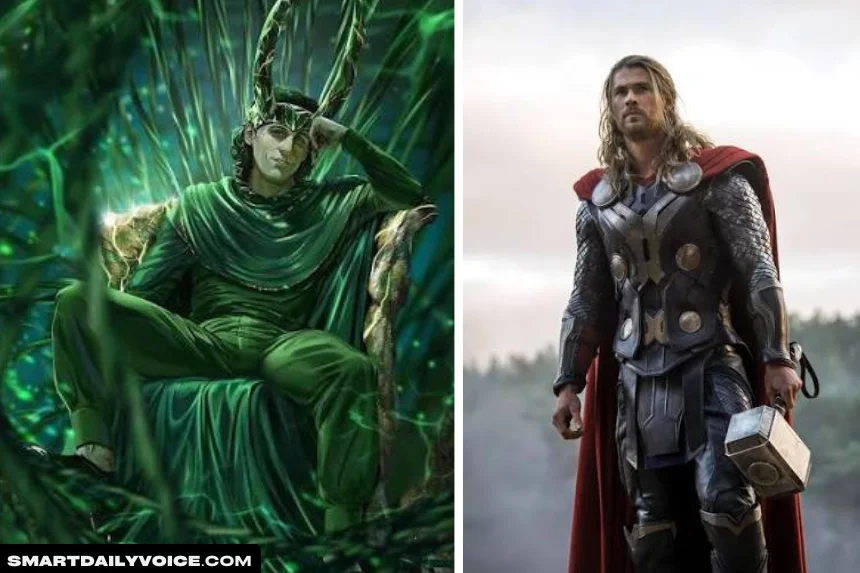
Will God of Stories Loki Return in Avengers: Doomsday?
Tom Hiddleston is officially part of the Avengers: Doomsday cast. Marvel’s announcement confirms his involvement alongside Chris Hemsworth, Anthony Mackie, Pedro Pascal, Robert Downey Jr. and other returning performers. The film is currently scheduled for December 18, 2026.
Marvel has not publicly explained the size or nature of Loki’s role. It is therefore unconfirmed whether he will leave his throne, communicate with other characters remotely or appear through another point in time.
His position at the centre of the branching timelines gives him an obvious connection to a Multiverse-level crisis, but any detailed description of how he encounters Doctor Doom remains speculation.
Could Loki appear in Avengers: Secret Wars?
Loki could also be important to Avengers: Secret Wars, which Marvel currently lists for May 7, 2027. The film follows Doomsday and is expected to continue its multiversal conflict, but Marvel has not confirmed Loki’s precise role in the story.
His comic history provides an interesting connection. Loki became the God of Stories during the period leading directly into Marvel’s 2015 Secret Wars event, when the Multiverse was collapsing through incursions. That does not prove the MCU will adapt the same events, but it gives the filmmakers relevant material to draw from.
Where to Read the God of Stories Loki Comics
The essential series is Loki: Agent of Asgard by Al Ewing, Lee Garbett and other contributing artists.
A useful reading order is:
- Journey into Mystery by Kieron Gillen for Kid Loki’s story
- Young Avengers (2013) for the transition from Kid Loki to the older form
- Loki: Agent of Asgard #1–10 for Loki’s missions and hidden guilt
- Loki: Agent of Asgard #11–13 for the confrontation with King Loki
- Loki: Agent of Asgard #14–17 for the Multiverse’s end and the completed transformation
- Defenders: Beyond and Al Ewing’s Immortal Thor for later uses of Loki’s story-related role
Marvel’s official guide to Loki: Agent of Asgard provides a detailed overview of the transformation, while Loki’s official comics profile follows the character’s wider Marvel history.
Frequently Asked Questions
What is God of Stories Loki the god of?
He is the god of stories, identity and narrative possibility. The title allows Loki to move beyond being defined entirely by deception and villainy. It does not mean he literally owns every story in the Marvel Universe.
When did Loki become the God of Stories?
Loki declared himself the God of Stories in Loki: Agent of Asgard #13, published in April 2015. The transformation followed his confrontation with King Loki and his rejection of a predetermined villainous future.
Is God of Stories Loki a different variant?
In the main Marvel comic continuity, he is not simply an unrelated variant. He is the incarnation produced through the complicated sequence involving the original Loki, Kid Loki and Ikol.
The MCU version is a separate continuity and should not be assumed to possess exactly the same history or abilities.
Did Loki create the Multiverse?
MCU Loki did not create the Multiverse. The branching realities already existed. He destroyed the Temporal Loom and used his magic to prevent the branches from dying, allowing the wider Multiverse to survive.
Can God of Stories Loki control every timeline?
The MCU finale shows Loki sustaining the timeline branches, but it does not establish that he directly controls every event or decision within them.
His comic counterpart can influence stories and escape predetermined roles, but he is not shown having unrestricted control over all Marvel realities.
Is God of Stories Loki stronger than Kang?
MCU Loki has moved beyond the system created by He Who Remains and can act across time in ways he could not before. However, Marvel has not established a definitive rule stating that he can defeat every Kang variant under all circumstances.
Is God of Stories Loki immortal?
Loki possesses the long life and resilience associated with Marvel’s Asgardian gods. His God of Stories form has also survived unusual cosmic events, including the end-stage destruction surrounding an incursion. That does not necessarily make him impossible to harm or erase.
Will Loki be in Avengers: Doomsday?
Yes. Tom Hiddleston is included in Marvel’s official cast announcement. The exact nature of Loki’s appearance has not been disclosed.
Conclusion
God of Stories Loki represents Loki’s refusal to remain imprisoned by his past. In the comics, he escapes the repeating cycle that always turns him back into a villain. In the MCU, he gives up the life he wanted so every timeline—and every person he cares about—can retain the freedom to choose.
The two versions are not identical, but they share the same central idea: Loki finally earns a throne when he no longer desires one for himself. With Tom Hiddleston confirmed for Avengers: Doomsday, that transformation is likely to remain important to the MCU’s multiversal future.