





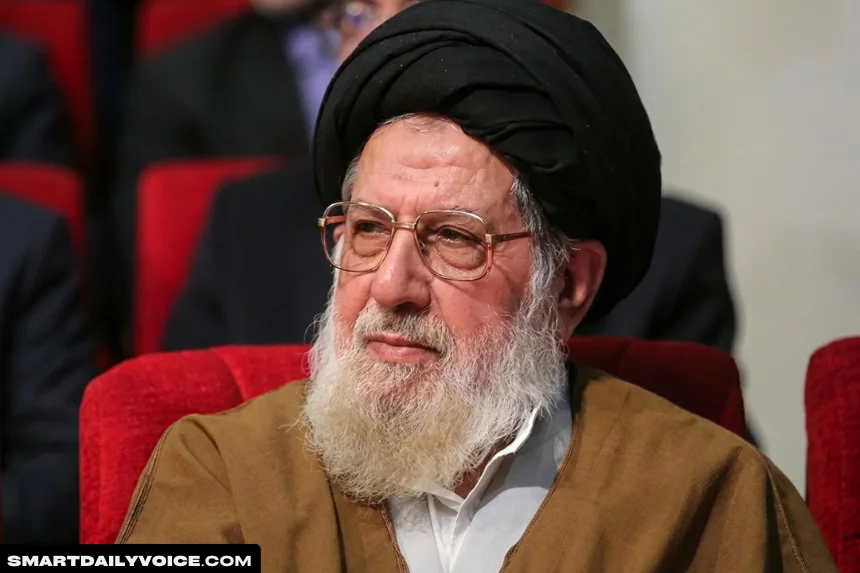
Seyyed Mohammad Khamenei is an Iranian Shia cleric, jurist, former parliamentarian, and scholar of Islamic philosophy. Born in Mashhad in 1935, he is the elder brother of Ali Khamenei and is best known for serving in Iran’s 1979 constitution-review assembly, representing Mashhad in two parliamentary terms, and promoting research on Mulla Sadra.
He is not the same person as Ali Khamenei or Mojtaba Khamenei. In fact, several pages that appear for this keyword discuss those relatives instead of Mohammad. That confusion can produce serious biographical errors, especially when writers transfer dates, offices, education, and political roles from one family member to another.
The public record for Seyyed Mohammad Khamenei is strongest in three areas. First, he combined seminary education with legal studies. Second, he participated in constitution-making and parliamentary politics after Iran’s 1979 revolution. Finally, he developed a long scholarly career focused on Islamic philosophy, Iranian intellectual history, and the thought of Mulla Sadra.
Seyyed Mohammad Khamenei Quick Facts
| Fact | Verified summary |
|---|---|
| Full name | Seyyed Mohammad Hosseini Khamenei |
| Common spellings | Seyyed Mohammad Khamenei, Seyed Mohammad Khamenei, Sayyid Muhammad Khamenei |
| Born | December 25, 1935, commonly given as 3 Dey 1314 in the Iranian calendar |
| Birthplace | Mashhad, Iran |
| Nationality | Iranian |
| Main roles | Shia cleric, jurist, philosopher, former parliamentarian, institutional scholar |
| Father | Javad Khamenei |
| Known siblings | Ali Khamenei, Hadi Khamenei, Hassan Khamenei, and Badri Khamenei |
| Constitutional role | Representative for Khorasan in the 1979 Assembly of Experts for Constitution |
| Parliamentary service | Mashhad representative in the first and second Islamic Consultative Assembly, 1980–1988 |
| Main scholarly field | Islamic philosophy, especially Mulla Sadra and transcendent philosophy |
| Major institution | Sadra Islamic Wisdom Foundation |
| Iranology Foundation | President from 2013 to 2022 |
| Net worth | No authoritative public estimate is available |
Who Is Seyyed Mohammad Khamenei?
Seyyed Mohammad Khamenei is a religious scholar whose public career crosses law, politics, education, and philosophy. Although international audiences associate his family name with Iran’s supreme leadership, his own best-documented work differs from that of his younger brother Ali.
Mohammad entered national politics during the formation of the post-revolutionary state. He took part in the elected assembly that reviewed the new constitution in 1979. Later, he represented Mashhad in parliament for eight years.

However, his long-term public identity became increasingly scholarly. After leaving parliament, he concentrated on Islamic philosophy, legal thought, teaching, publishing, conferences, and research institutions. Consequently, his most distinctive intellectual association is not with executive government but with Mulla Sadra studies and the Sadra Islamic Wisdom Foundation.
His profile can therefore be understood through three phases:
- Religious and legal education.
- Constitution-making and parliamentary service.
- Philosophical scholarship and institutional leadership.
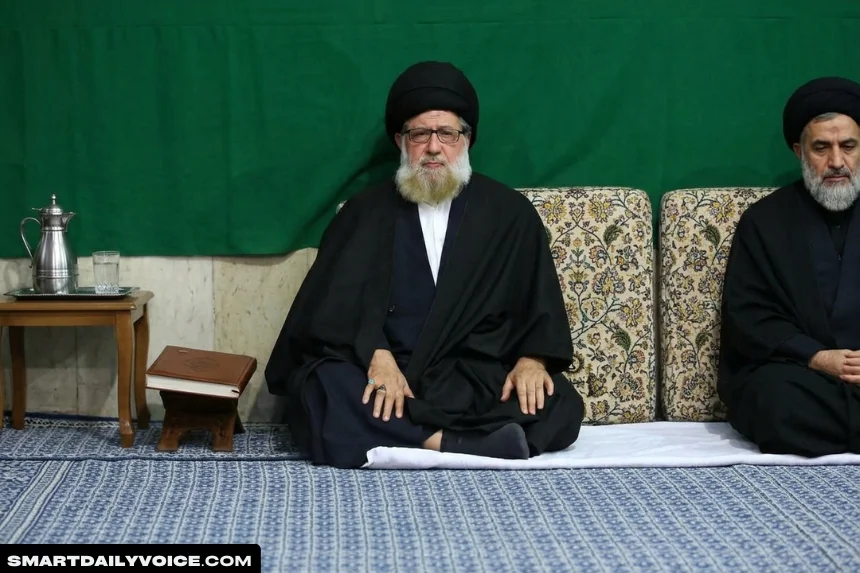
Seyyed Mohammad Khamenei Is Not Ali or Mojtaba Khamenei
The Khamenei family includes several public figures, so the names are easy to confuse. Nevertheless, they refer to different people with separate careers.

| Person | Relationship | Best-known public role |
| Seyyed Mohammad Khamenei | Elder brother of Ali and Hadi | Cleric, jurist, former parliamentarian, Islamic-philosophy scholar |
| Ali Khamenei | Younger brother of Mohammad | Iranian cleric and political leader who served as supreme leader |
| Mojtaba Khamenei | Mohammad’s nephew and Ali’s son | Cleric and political figure |
| Hadi Khamenei | Younger brother of Mohammad and Ali | Cleric, journalist, and reformist political figure |
This distinction matters because a biography of Mojtaba cannot verify Mohammad’s education or offices. Similarly, writers cannot copy an official biography of Ali into an article about his elder brother.
Mohammad’s public record has its own timeline. He preceded Ali in age, served in the constitution-review assembly, represented Mashhad in the first two parliaments, survived an attack in 1982, and later built a public identity around philosophical research.
What Is Seyyed Mohammad Khamenei’s Full Name?
English-language sources commonly render his full name as Seyyed Mohammad Hosseini Khamenei. Persian names can appear in several Latin-alphabet spellings, so readers may also encounter Seyed, Sayyid, Muhammad, or Khamene’i.
“Seyyed” is an honorific traditionally used for a person regarded as a descendant of the Prophet Muhammad. “Hosseini” indicates the claimed line of descent through Husayn ibn Ali. However, English-language articles often shorten the name to Mohammad Khamenei.
These spelling differences do not indicate separate people. Still, search engines may rank material about Ali or Mojtaba because all three names include “Seyyed” and “Khamenei.” Therefore, a reliable search should include his full name, birth year, or institutional connection to the Sadra foundation.
Early Life and Family Background
Seyyed Mohammad Khamenei was born in Mashhad in 1935. Public records widely give December 25 as his birth date, corresponding to 3 Dey 1314 in commonly used Iranian-calendar conversions.

Mashhad is one of Iran’s most important religious centers because it is home to the shrine of Imam Reza. As a result, the city has long supported seminaries, religious schools, libraries, and networks of Shia scholarship.
Mohammad grew up in a clerical family. His father, Seyyed Javad Khamenei, was a religious scholar. Public biographies identify Mohammad as the oldest son in the family formed by Javad Khamenei and Khadijeh Mirdamadi.
His siblings later followed different paths. Ali became a central political and religious figure. Hadi became a cleric, journalist, and reformist politician. Hassan had a less public religious profile, while Badri also became known through the family’s political history.
Nevertheless, family identity should not replace an individual biography. Mohammad developed his own combination of seminary study, legal education, constitutional work, and philosophical research.
Education in Mashhad, Qom, and Tehran
Seyyed Mohammad Khamenei’s education combined traditional religious learning with modern university law. This dual background helps explain his later interest in jurisprudence, constitutional questions, and philosophy.
Religious education in Mashhad
Public biographies report that he began studying Arabic, Quranic subjects, and Islamic sciences while young. He continued at religious schools in Mashhad, where he encountered the city’s established tradition of jurisprudence and theology.
Several teacher names appear in published biographies. However, the level of documentation differs from one name to another. Therefore, it is safer to say that he studied within the Mashhad seminary tradition rather than presenting an exact, complete list of teachers as if it were an official transcript.
Further study in Qom
In the 1950s, he continued religious study in Qom, Iran’s leading center of Shia seminary education. Public accounts connect his Qom years with jurisprudence, principles of law, philosophy, and the wider clerical debates of the period.
This setting placed him close to influential twentieth-century religious thinkers. Moreover, it exposed him to both classical Islamic philosophy and the political arguments that were developing among Iranian clerics before the 1979 revolution.
Legal education in Tehran
Mohammad also studied law and political science in Tehran. Public biographies commonly associate him with the University of Tehran’s legal education and a qualification in criminal or judicial law during the 1960s.
The combination was unusual but significant. Seminary study trained him in Islamic jurisprudence and philosophical texts, while university law introduced modern legal institutions and codified legal reasoning.
Consequently, he later entered political institutions with expertise that was both religious and legal. That background also explains why constitutional and judicial subjects appear repeatedly in accounts of his parliamentary work.
Political Activity Before the 1979 Revolution
Public biographies connect Seyyed Mohammad Khamenei’s early political awareness with Iran’s oil-nationalization era and later religious opposition to the Pahlavi monarchy. However, the details require careful wording because many accounts rely on memoirs or retrospective narratives.
He reportedly supported clerical and nationalist arguments around oil nationalization while still a student. Later, he joined religious political networks that opposed the monarchy.
Some accounts describe his participation in a private clerical group that discussed organization and political strategy. Nevertheless, readers should treat claims about underground structures, membership lists, and specific responsibilities as memoir evidence unless independent records support them.
The available evidence confidently places Mohammad within a politically engaged clerical generation. By 1979, he had enough public standing in Khorasan to win election to the body responsible for reviewing the new constitution.
Seyyed Mohammad Khamenei’s Role in the 1979 Constitution
Seyyed Mohammad Khamenei represented Khorasan in the Assembly of Experts for Constitution. The assembly met from August to November 1979 to review, debate, and finalize the proposed constitution of the Islamic Republic.
The institution’s English name can cause confusion. It was not the later Assembly of Experts that selects and oversees Iran’s supreme leader. Instead, it was a temporary constitution-making body elected after the revolution.
Mohammad was one of its 75 members. Therefore, descriptions that call him one of the people involved in drafting or finalizing the constitution have a factual basis.
However, membership does not mean that he personally wrote every article. Constitutional texts emerge through committees, proposals, amendments, speeches, votes, and institutional negotiation. A careful biography should describe him as a member and participant rather than assigning the entire document to him.
His legal and clerical background made the role a natural extension of his education. Moreover, the assembly linked his early political career to debates about state structure, religious authority, rights, institutions, and law.
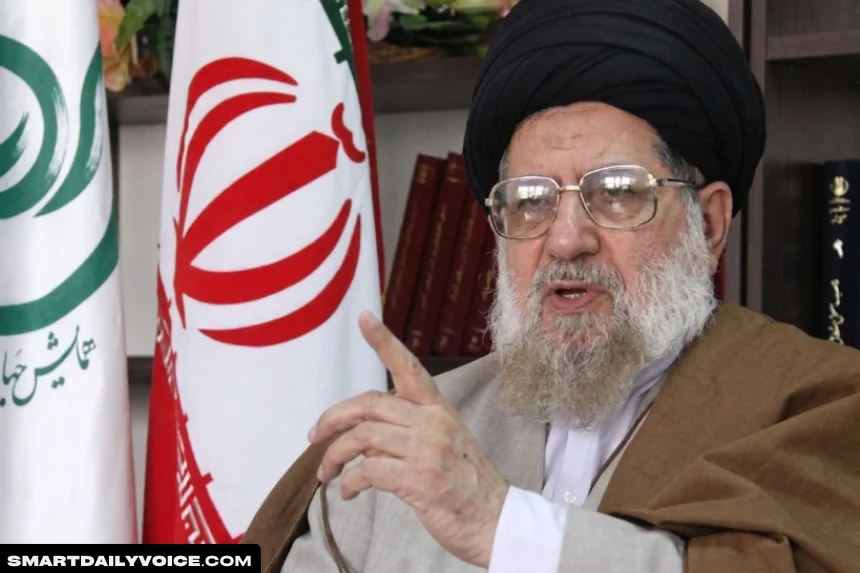
Seyyed Mohammad Khamenei’s Parliamentary Career
Mohammad represented Mashhad in the first and second Islamic Consultative Assembly. His service ran from 1980 until 1988, covering the Islamic Republic’s first eight years of parliamentary government.
The official parliamentary member record is the most useful institutional source for this part of his biography. It identifies his constituency and parliamentary membership.
First parliamentary term
The first parliament began in May 1980. It worked during a period of extraordinary instability that included institutional conflict, political violence, the Iran-Iraq War, and the construction of a new legal system.
Mohammad’s legal training made constitutional and judicial questions especially relevant to his work. Historical summaries associate him with the parliament’s legal discussions and leadership structure.
Nevertheless, the first parliament included hundreds of members and many competing institutions. Therefore, writers should not credit broad national developments to one representative without direct evidence.
Second parliamentary term
He won another term and remained in parliament until 1988. Accounts of the second parliament place him among representatives who sometimes questioned government decisions and foreign-policy handling.
This record complicates attempts to reduce him to a simple family role. He operated as a cleric and politician within the Islamic Republic, but he also developed positions through legal, parliamentary, and philosophical reasoning.
After the second term, he did not continue as a long-term electoral politician. Instead, his public work increasingly moved toward research and education.
The 1982 Assassination Attempt
On January 10, 1982, gunmen attacked Seyyed Mohammad Khamenei as he was leaving parliament. Historical accounts report that he was shot in the back and required hospital treatment.
Contemporary accounts also reported that the attackers killed two guards. Mohammad survived and later returned to public activity.
Public biographies consistently establish the event’s basic facts. However, online summaries do not consistently provide the same account of the attackers, planning, or motive. Consequently, a responsible biography should not name an organization as the perpetrator without a strong direct source.
The attack belongs in his timeline for two reasons. First, it shows the level of political violence affecting Iranian officials during the early 1980s. Second, it interrupted but did not end his parliamentary career.
Why Did Seyyed Mohammad Khamenei Leave Front-Line Politics?
Mohammad’s parliamentary service ended in 1988. Afterward, his public profile shifted toward law, teaching, Islamic philosophy, publishing, and institutional work.
No single verified public statement proves that one event caused this change. Therefore, it would be speculative to say that the assassination attempt, a political dispute, or family strategy alone explains his departure from electoral politics.
Instead, the available record shows a gradual change in emphasis. His later publications, conference work, and foundation leadership indicate that he chose to devote substantial energy to intellectual and educational projects.
This shift did not remove him from public life. Rather, it changed the type of influence he pursued. Parliament gave way to research institutes, journals, books, lectures, and international philosophy meetings.
Seyyed Mohammad Khamenei and Islamic Philosophy
Seyyed Mohammad Khamenei developed a particularly strong association with Islamic philosophy and the work of Mulla Sadra. Scholars commonly call the seventeenth-century Iranian philosopher Mulla Sadra’s system transcendent philosophy, or al-hikma al-muta‘aliya.
Mohammad’s writings and institutional activities examine Mulla Sadra from several directions. These include metaphysics, the soul, mental existence, practical philosophy, Quranic interpretation, and the relation between philosophy and science.
In an interview about Mulla Sadra, he discussed the intellectual setting in which Mulla Sadra developed his ideas. The interview also reflects his interest in how modern scholars interpreted Iranian philosophy.
Why Mulla Sadra matters in his work
Mulla Sadra attempted to synthesize several traditions, including Peripatetic philosophy, illuminationist thought, theology, mysticism, and Quranic interpretation. As a result, his work became central to later Iranian philosophy.
Mohammad Khamenei’s scholarship presents this tradition as a living field rather than only a historical subject. He has argued for the contemporary relevance of philosophical questions about existence, knowledge, the human soul, ethics, and society.
Philosophy and science
One of his documented articles examines philosophy and its relationship to science. This subject asks whether philosophy supplies foundations for scientific knowledge, whether science can answer metaphysical questions, and how the two fields should interact.
His approach belongs to a broader Islamic-philosophy discussion. It does not simply oppose religion and science. Instead, it investigates their subjects, methods, assumptions, and limits.
Soul and spirit
Several bibliographic records connect him with studies of the soul and spirit in Mulla Sadra’s philosophy. These discussions address whether the human soul begins with bodily existence, how it develops, and how spiritual reality relates to philosophical psychology.
The topic is complex, so popular biographies should avoid presenting one short summary as a complete account. Nevertheless, it demonstrates the depth of his engagement with Mulla Sadra’s metaphysics and theory of the human person.
Practical philosophy
He has also written about practical philosophy. This field connects philosophical reasoning to ethics, society, politics, and human conduct.
Consequently, his work does not treat philosophy as a purely abstract exercise. It asks how philosophical ideas shape life, institutions, moral judgment, and public order.
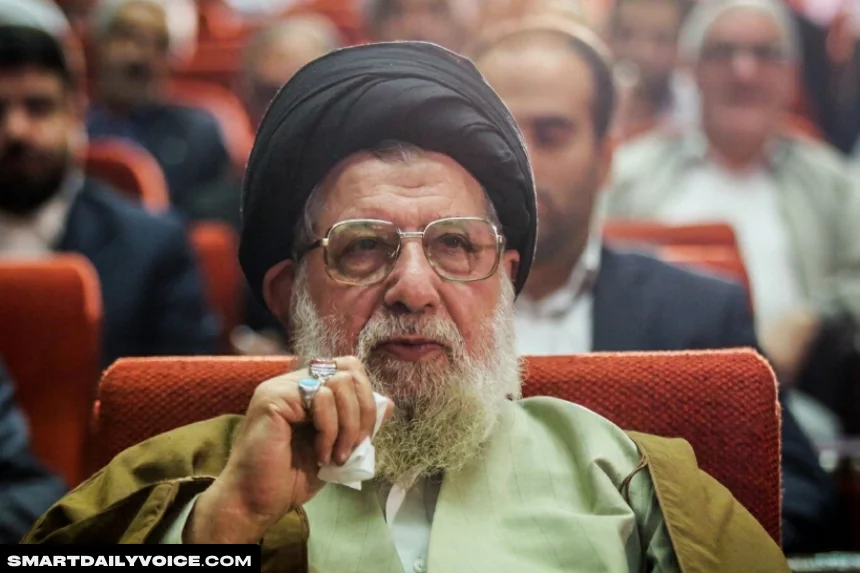
Work With the Sadra Islamic Wisdom Foundation
Seyyed Mohammad Khamenei has maintained a long association with the Sadra Islamic Wisdom Foundation. The institution promotes the study of Mulla Sadra, Islamic philosophy, and related intellectual traditions.
Its work has included research, conferences, books, translations, journals, lectures, and international academic exchange. In particular, the foundation helped organize scholarly attention around Mulla Sadra’s life and ideas.
Public sources differ on the precise date and institutional sequence of the foundation’s establishment. Therefore, a careful article should avoid presenting one unverified founding year as certain.
Public records document Mohammad’s leadership more clearly than the institution’s exact administrative origin date. He has served as a central public figure in the institution and has spoken at its events for decades.
Journals and publishing
The foundation supports specialized philosophical publishing, including Kheradnameh Sadra. Bibliographic databases list multiple articles by Seyyed Mohammad Khamenei or abbreviated forms of his name in the journal.
However, abbreviated author names can create identity problems. Researchers should check an entry credited only to “S. Khamenei” against the publication, institution, subject, and author biography before assigning it to him.
International conferences
The foundation’s conferences have attempted to connect Iranian scholars with researchers from other countries. These events have addressed Mulla Sadra, Islamic philosophy, practical wisdom, human nature, and philosophy’s contemporary role.
Institutional conferences are significant because they shape research networks and translation priorities. They also help explain why Mohammad’s influence is larger within specialized philosophical circles than in everyday international political coverage.
Presidency of the Iranology Foundation
Seyyed Mohammad Khamenei served as president of the Iranology Foundation from 2013 until 2022. The institution studies Iran’s history, civilization, languages, arts, traditions, and cultural identity.
This role expanded his institutional interests beyond Islamic philosophy. Iranology includes pre-Islamic history, Islamic civilization, literature, archaeology, geography, art, anthropology, and cultural studies.
Why some sources are outdated
Several online biographies still call him the current president of the Iranology Foundation. That information is stale.
In 2022, the relevant authorities selected Mohammad-Hossein Rajabi Davani as the new president. An official Iran National Museum report later identified Rajabi Davani in that role.
Therefore, the accurate wording is:
Seyyed Mohammad Khamenei served as president of the Iranology Foundation from 2013 to 2022.
This correction is important because current office titles affect search accuracy. A biography can remain broadly reliable while still containing an outdated “current position” line.
Books and Published Research
Seyyed Mohammad Khamenei has written, edited, translated, or supervised works in philosophy, law, Quranic studies, and Iranian intellectual history.
English titles vary because translators can render Persian and Arabic works in more than one way. Therefore, writers should reproduce catalog titles carefully.
Selected books and studies
Public bibliographic records include works commonly translated as:
- Mulla Sadra’s Life, Character, and Philosophy
- Mulla Sadra and Transcendent Philosophy
- The Qur’anic Hermeneutics of Mulla Sadra
- Man in the Passage of Existence
- Religion and Theology
- Judicial Sciences
- Spirit and Soul
- The Course of Wisdom in Iran and the World
The CiNii Books catalog confirms a Persian volume translated as Man in the Passage of Existence, published by the Sadra foundation in 2007.
Selected article subjects
Academic records also associate him with articles on:
- Philosophy and science.
- Mental existence.
- Practical philosophy.
- Mulla Sadra’s life and school.
- The human soul.
- Plato’s influence or “spirit” within Mulla Sadra’s philosophy.
- Humanity and possible worlds.
The list illustrates thematic consistency. His work repeatedly returns to existence, knowledge, the soul, ethics, religion, and the development of Iranian Islamic philosophy.
Why publication lists differ
Some sources translate titles differently. Others merge editions, conference papers, and reprints. Moreover, databases may abbreviate the author as “Seyyed Khamenei,” “Prof. S. Khamenei,” or “Ayatollah Seyyed Khamenei.”
Therefore, a definitive bibliography would require checking the original title page, publisher record, and edition history. A general biography should present selected verified works rather than claim a complete list.
Seyyed Mohammad Khamenei’s Main Philosophical Themes
Mohammad’s writings cover several connected questions.
Existence and reality
Mulla Sadra’s philosophy places existence at the center of metaphysics. Mohammad’s work examines how this approach differs from systems that treat essence or abstract definition as primary.
This subject affects many other debates, including change, causation, knowledge, and the relation between material and spiritual reality.
Human nature
His work on the soul, spirit, and human existence explores how a human being develops and how bodily life relates to intellectual or spiritual becoming.
These questions are not only theological. They also shape ethical and educational views about character, responsibility, and human potential.
Knowledge and mental existence
Mental existence concerns how things exist in the mind when people perceive, imagine, or understand them. Islamic philosophers used the topic to study the relation between thought and external reality.
Mohammad’s documented writing on the subject places him within a long epistemological debate. It also connects classical philosophy to modern questions about concepts and knowledge.
Philosophy, ethics, and society
His interest in practical philosophy asks how wisdom affects action. Therefore, his philosophical work often moves from metaphysics toward ethics, culture, law, and political life.
This connection helps explain his career path. His legal and political experience gave him practical institutions to consider, while his later scholarship provided a philosophical framework for interpreting them.
Iranian intellectual history
His Iranology work and publications also examine philosophy as part of Iran’s broader civilizational history. This includes the relationship between ancient Iranian traditions, Islamic thought, and later philosophical schools.
However, claims about ancient religion or national identity can be interpretive. Writers should present them as his scholarly viewpoint rather than universally accepted historical fact.
Family and Private Life
Public information about Seyyed Mohammad Khamenei’s family is limited beyond his well-known relationships within the Khamenei family.
Reliable records identify him as the elder brother of Ali and Hadi Khamenei. He is also the uncle of Mojtaba Khamenei.
Reports in 2022 stated that Mohammad’s wife died. However, widely accessible authoritative reporting did not consistently provide her name, career, or a detailed biography.
Reliable sources also do not provide a consistent public list of his children. Consequently, responsible biographical writing should not fill the gap with social-media claims or unsourced family trees.
Privacy is especially important because a famous surname can encourage speculation. A strong biography should include only personal information that is relevant and verifiable.
Does Seyyed Mohammad Khamenei Have a Verified Net Worth?
No authoritative public source confirms a reliable net-worth estimate for Seyyed Mohammad Khamenei.
He has held political, academic, legal, and institutional roles. Nevertheless, a public title does not reveal personal assets, liabilities, inheritance, property ownership, or investment value.
Biography websites sometimes publish net-worth numbers without financial disclosures or transparent methods. Writers should not repeat those figures as facts.
A trustworthy article should say:
No authoritative financial source confirms Seyyed Mohammad Khamenei’s net worth.
This answer is more useful than an invented number because it tells readers what the public evidence can and cannot establish.
Where Is Seyyed Mohammad Khamenei Now?
Public records continued to identify Seyyed Mohammad Khamenei as living during this article’s August 2026 review.
However, he no longer heads the Iranology Foundation. His presidency ended in 2022 when the relevant authorities appointed Mohammad-Hossein Rajabi Davani to the role.
Mohammad remains principally associated with Islamic philosophy, Mulla Sadra studies, and the Sadra Islamic Wisdom Foundation. Nevertheless, reliable current information about his daily teaching schedule, health, residence, or office routine is limited.
Therefore, older biographies that list several university posts as current should be read carefully. They may accurately describe earlier teaching work without proving an active 2026 appointment.
Seyyed Mohammad Khamenei Timeline
| Year | Event |
| 1935 | Born in Mashhad, commonly dated December 25 |
| 1940s–1950s | Began religious and Arabic studies in Mashhad |
| 1950s | Continued seminary study in Qom |
| 1960s | Completed university-level legal and political studies in Tehran |
| 1979 | Elected to the Assembly of Experts for Constitution for Khorasan |
| 1980 | Entered the first Islamic Consultative Assembly as a Mashhad representative |
| 1982 | Survived a gun attack while leaving parliament |
| 1984 | Began a second parliamentary term |
| 1988 | Parliamentary service ended |
| Later decades | Expanded teaching, writing, legal, and Islamic-philosophy work |
| 1990s–2000s | Became closely identified with the Sadra foundation and Mulla Sadra scholarship |
| 2013 | Became president of the Iranology Foundation |
| 2022 | Ended his Iranology Foundation presidency |
| 2026 | Public profile remained centered on philosophy and scholarly institutions |
Seyyed Mohammad Khamenei FAQ
1. Who is Seyyed Mohammad Khamenei?
Seyyed Mohammad Khamenei is an Iranian Shia cleric, jurist, former parliamentarian, and Islamic-philosophy scholar. He participated in Iran’s 1979 constitution-review assembly, served two parliamentary terms, and became known for work on Mulla Sadra.
2. Is Seyyed Mohammad Khamenei Ali Khamenei’s brother?
Yes. Seyyed Mohammad Khamenei is the elder brother of Ali Khamenei. However, the two men had distinct educational, political, and scholarly careers.
3. Is Seyyed Mohammad Khamenei the same person as Mojtaba Khamenei?
No. Mojtaba Khamenei is Ali Khamenei’s son and Seyyed Mohammad Khamenei’s nephew. Writers should not use pages about Mojtaba as biography sources for Mohammad.
4. How old is Seyyed Mohammad Khamenei?
He was born on December 25, 1935, according to commonly cited public records. Therefore, he turned 90 in December 2025.
5. What did Seyyed Mohammad Khamenei do in politics?
He represented Khorasan in the 1979 Assembly of Experts for Constitution. Later, he represented Mashhad in the first and second Islamic Consultative Assembly from 1980 to 1988.
6. Was Seyyed Mohammad Khamenei involved in writing Iran’s constitution?
He was one of the elected members who reviewed and finalized the 1979 constitution. Nevertheless, it is more accurate to describe him as a participant in the constitution-making assembly than as the sole author of specific provisions.
7. What happened in the 1982 assassination attempt?
Gunmen attacked him on January 10, 1982, as he left parliament. The gunfire wounded him, but he survived; reports said the attackers killed two guards.
8. What is Seyyed Mohammad Khamenei known for in philosophy?
He is best known for research and institution-building related to Mulla Sadra and transcendent philosophy. His published subjects include existence, the soul, mental existence, practical philosophy, Quranic interpretation, and the relationship between philosophy and science.
9. Does Seyyed Mohammad Khamenei still lead the Iranology Foundation?
No. He served as president from 2013 to 2022. Mohammad-Hossein Rajabi Davani succeeded him, so pages that still call Mohammad the current president are outdated.
10. What is Seyyed Mohammad Khamenei’s net worth?
No authoritative public source confirms a reliable net-worth figure. Readers should treat any exact amount published without financial documentation as unsupported.
Conclusion
Seyyed Mohammad Khamenei has a distinct Iranian public career, and writers should not merge his biography with those of Ali or Mojtaba Khamenei. His documented career combines religious and legal education, service in Iran’s 1979 constitution-review assembly, two parliamentary terms, and decades of Islamic-philosophy scholarship.
His most lasting intellectual association is with Mulla Sadra and the Sadra Islamic Wisdom Foundation. Moreover, he served as president of the Iranology Foundation from 2013 to 2022, although outdated profiles sometimes still list that office as current.
Ultimately, the best-supported account of Seyyed Mohammad Khamenei focuses on public institutions, parliamentary records, published philosophy, and verified family relationships. Evidence about wealth, children, health, and private life remains limited, so writers should not invent details.