




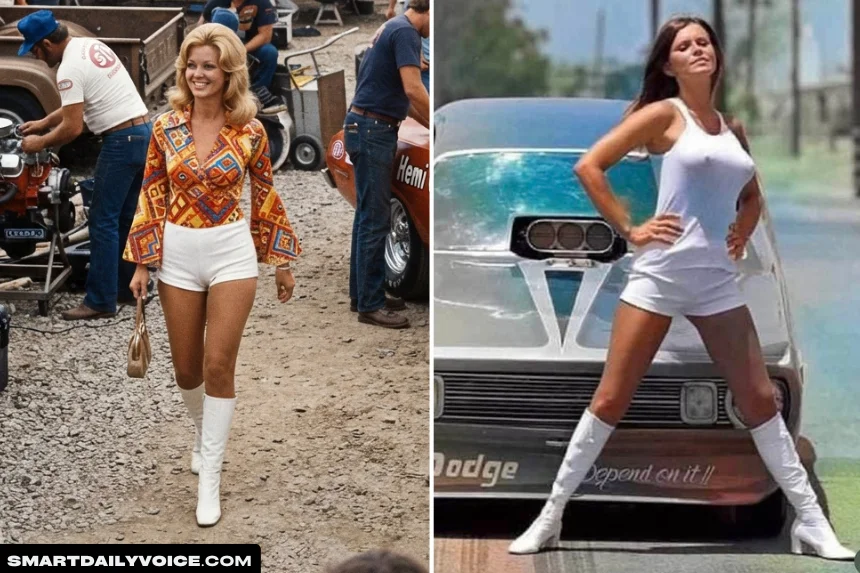
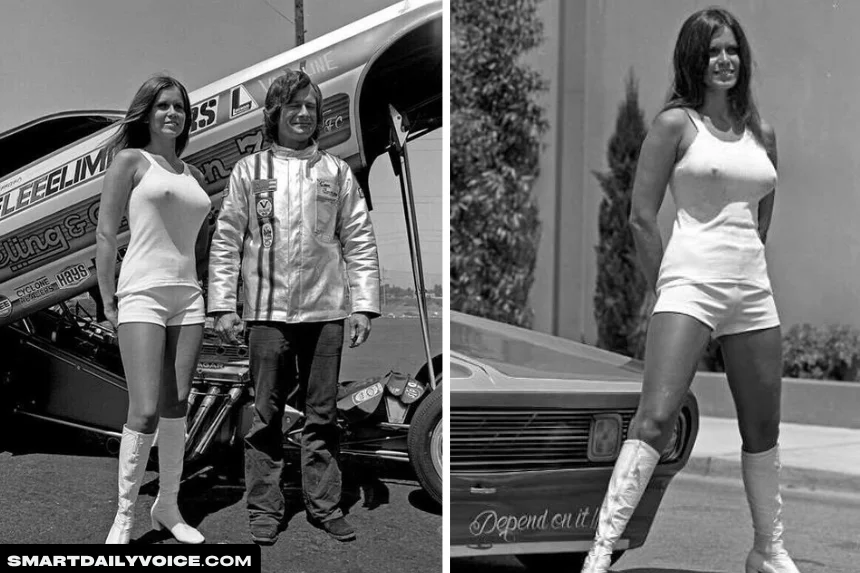
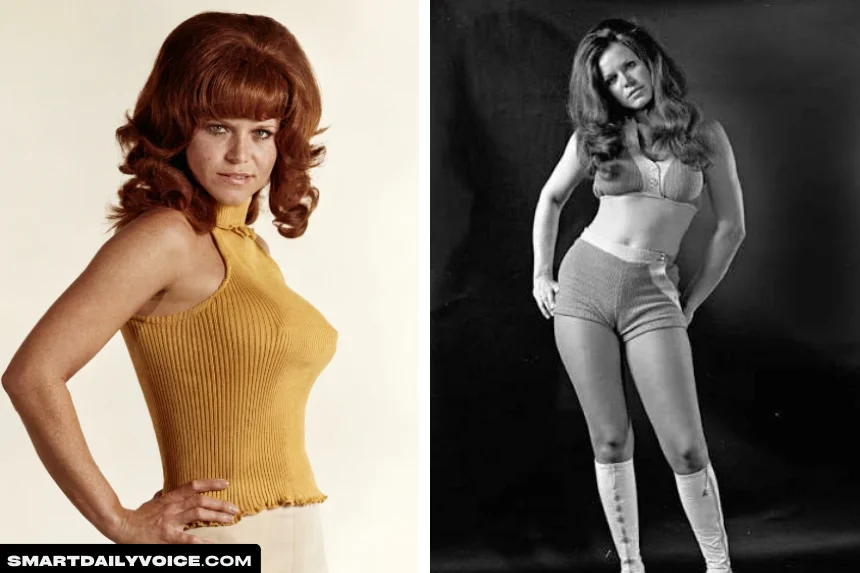
Barbara Roufs was a 1970s drag-racing trophy queen and promotional model best remembered as the 1973 Professional Dragster Association Queen. She did not become famous as a race-car driver. Instead, her appearances at racing events—and the surviving photographs taken by motorsports photographer Tom West—made her a recognizable figure from Southern California’s drag-racing era.
Reliable information about her private life remains limited. Moreover, online biographies disagree about her birth year, family, residence, and cause of death. The most specific memorial record lists July 22, 1943, and January 25, 1991, although those dates have not been confirmed through an accessible government vital record.
Quick answer: Who was Barbara Roufs?
| Question | Verified or carefully qualified answer |
|---|---|
| Who was Barbara Roufs? | A drag-racing trophy queen and promotional personality |
| Why was she famous? | She was identified as the 1973 Professional Dragster Association Queen |
| Was Barbara Roufs a race-car driver? | No reliable source reviewed identifies her as a competitive driver |
| Where did she appear? | She was associated with Southern California drag-racing events, including the PDA scene |
| Who photographed her? | Motorsports photographer Tom West |
| Reported birth date | July 22, 1943, according to a memorial index; not independently verified |
| Reported death date | January 25, 1991, according to the same index |
| Reported age at death | 47 |
| Cause of death | Frequently reported as suicide, but no accessible official record was located |
| Barbara Roufs net worth | Unknown; no authoritative figure exists |
The central Barbara Roufs facts—her 1973 PDA Queen title, association with Tom West, and presence in drag-racing culture—have stronger support than the extensive personal details found on modern biography websites.
Barbara Roufs biography and key facts
| Detail | Best-supported information |
|---|---|
| Public name | Barbara Roufs |
| Reported expanded name | Barbara Jean Riley Roufs appears in memorial databases |
| Occupation | Trophy queen and promotional model associated with drag racing |
| Known title | 1973 PDA Queen |
| Racing organization | Professional Dragster Association |
| Noted photographer | Tom West |
| Birth | Memorial index lists July 22, 1943, in Clovis, California |
| Death | Memorial index lists January 25, 1991, in Fresno, California |
| Mother | Thelma Ruby Riley, confirmed through her obituary |
| Father | Not independently established by the sources reviewed |
| Husband | Not authoritatively confirmed |
| Children | Secondary sources identify a daughter, but complete details remain unverified |
| Height and measurements | Not reliably documented |
| Net worth | Not publicly confirmed |
The memorial information is specific, but it derives from a community-managed database. Consequently, its exact dates and expanded name deserve attribution rather than unconditional presentation as official facts.
Barbara Roufs timeline
| Date | Event |
|---|---|
| July 22, 1943 | Reported birth date in Clovis, California, according to the memorial index |
| Late 1960s–early 1970s | Period commonly associated with her drag-racing promotional appearances |
| 1973 | Identified as the Professional Dragster Association Queen |
| 1970s | Photographed at racing events by Tom West |
| January 25, 1991 | Reported death in Fresno at age 47 |
| 2005 | Her mother’s obituary confirms that Barbara had died before Thelma Ruby Riley |
| 2010s | Vintage photographs and online tributes renew public interest |
| Present | She remains best known through preserved motorsports photography |
Industry coverage directly supports the 1973 title and Tom West connection. Meanwhile, the memorial index provides the reported birth and death dates, and the 2005 family obituary confirms that Barbara predeceased her mother.

Who was Barbara Roufs?
Barbara Roufs was a public-facing figure in early-1970s drag-racing promotions. Her role involved representing events, appearing beside racing vehicles and drivers, participating in presentations, and posing for promotional photographs.
The term “trophy girl” was commonly used during that period for women who appeared in victory ceremonies, event advertising, photographs, and other promotional settings. Today, the phrase can sound dated or reductive. However, it accurately reflects the job title used in historical discussions of that era.
Roufs became particularly associated with the Professional Dragster Association. NHRA histories describe the PDA as an organization that arranged significant drag-racing events during the 1960s and 1970s. For example, NHRA identifies organizer Doug Kruse as a central figure behind the association’s major Top Fuel races.

A Drag Race Central remembrance of Tom West gives the clearest industry-based description of Roufs. It calls her West’s favorite model and friend and identifies her specifically as the 1973 PDA Queen. Therefore, this title represents her best-supported career distinction.
Was Barbara Roufs a drag racer?
No reliable evidence shows that Barbara Roufs competed as a drag-racing driver. She was connected to drag racing through promotions and event presentation, not through documented racing results.
This distinction matters because several modern articles call her a “drag-racing champion,” “racing legend,” or “pioneer driver.” Those descriptions can mislead readers into believing that she drove a Top Fuel dragster or Funny Car in competition.
NHRA maintains detailed histories of important women drivers, including Barbara Hamilton, Shirley Shahan, Paula Murphy, Shirley Muldowney, and others who achieved licensing, qualifying, or event milestones. Roufs does not appear in those histories as a driver because her documented role was different.
Therefore, an accurate description is:
Barbara Roufs was a drag-racing trophy queen and promotional model, best known as the 1973 PDA Queen.
Writers should avoid calling her an athlete, driver, race winner, or motorsports champion unless a credible racing record emerges.

What did being the 1973 PDA Queen mean?
The title placed Roufs in a prominent promotional position at Professional Dragster Association events. It did not represent a driving championship.
The PDA organized high-profile races involving leading Top Fuel and Funny Car competitors. NHRA’s historical coverage connects the organization with major events at tracks including Lions Drag Strip, Carlsbad Raceway, Sacramento Raceway Park, Tulsa, and Orange County International Raceway.
OCIR hosted Professional Dragster Association racing during the relevant period. Moreover, NHRA’s account of the Keeling and Clayton team recalls a notable PDA event at Orange County International Raceway, confirming that the association held major competition there.
The track eventually closed in 1983 as development transformed the surrounding area. NHRA later described its final race as the end of an era for Southern California drag-racing fans.
For additional historical context, the Orange County International Raceway Wikipedia page summarizes the venue’s years of operation, location, and eventual closure.
How did Tom West shape Barbara Roufs’ legacy?
Tom West’s photography is a major reason Barbara Roufs remains recognizable decades later. His photographs preserved her appearances alongside dragsters, Funny Cars, drivers, and event settings.
West was a longtime drag-racing photographer whose work documented the sport’s personalities and machines. When he died in 2018, Drag Race Central’s remembrance specifically mentioned Roufs as his favorite model and friend. That direct connection carries more weight than later generic biography pages that simply repeat her name.
Moreover, a public Tom West memorial album described Roufs as a leading Southern California race queen. While a photographer’s tribute is not an independent vital record, it represents a relevant firsthand professional connection.
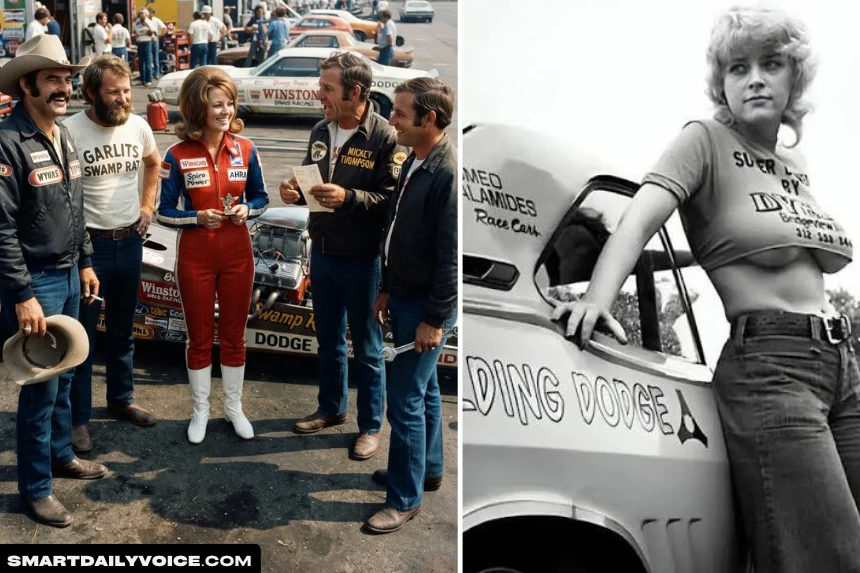
Later internet circulation separated many images from their original captions. Consequently, pictures of Roufs are sometimes mislabeled as other motorsports personalities, including Jungle Pam Hardy. Other photographs may receive incorrect years, tracks, car names, or event descriptions.
Publishers should therefore confirm an image’s original photographer, caption, event, and usage rights before presenting it as Barbara Roufs. A familiar face or repeated Pinterest caption is not enough.
What is known about Barbara Roufs’ early life?
Only limited parts of Barbara Roufs’ early family background can be supported through established records. Many detailed childhood narratives found online appear to have been reconstructed from her mother’s later obituary.
The memorial index lists Roufs as having been born in Clovis, California, on July 22, 1943. However, many competitor pages instead say she was born in Southern California in 1944. Because the accessible database is based on a Find a Grave memorial, the exact date and location have not been independently verified through a birth record.
A Fresno Bee obituary republished by Legacy confirms that Thelma Ruby Riley was Barbara Roufs’ mother. It also says Thelma owned a Clovis beauty salon for 50 years, served as a church organist, rode motorcycles, and enjoyed racing at Kearney Bowl.
The same obituary identifies Thelma’s surviving children as Vivian Deaton, James Riley, Bruce Riley, and adopted son Ben Gube. It states that her daughter Barbara Roufs had already died. Therefore, those family connections have stronger documentation than most other details in online profiles.
However, the obituary does not establish Roufs’ education, religion, childhood personality, body measurements, professional training, or the exact circumstances that brought her into drag-racing promotions. Those details should remain unconfirmed.
Was Barbara Roufs married, and did she have children?
Reliable public information about Roufs’ marriage remains incomplete. Her surname indicates a Roufs family connection, but the accessible authoritative sources reviewed here do not provide a confirmed marriage date, spouse biography, or detailed marital history.
Several secondary articles identify a daughter named Jet Dougherty. They also say she commented when Tom West’s photographs resurfaced. However, those articles do not consistently link to a preserved, authenticated statement that allows independent verification.
Therefore, careful wording is necessary:
Secondary reporting identifies Jet Dougherty as Barbara Roufs’ daughter, although complete family details have not been independently verified.
Some websites claim Roufs had one child, while social-media captions have described her as a mother of two. Others incorrectly refer to the reported daughter as a son. Consequently, a definitive child count should not be presented without stronger documentation.
Her husband’s identity is similarly unclear. Names and marriage dates that appear on newer biography sites should not be repeated unless supported by a marriage record, obituary, direct family statement, or established publication.

When did Barbara Roufs die?
The best available memorial index lists January 25, 1991, as Barbara Roufs’ date of death. It gives Fresno, California, as the place of death and reports that she was 47.
The age is internally consistent with the same memorial’s reported July 22, 1943, birth date. Nevertheless, readers should understand that Ancestry is displaying information from its U.S. Find a Grave Index, not an independently displayed California death certificate.
Her mother’s 2005 obituary offers additional confirmation that Barbara died before June 2005, although it does not provide her death date or circumstances.
Therefore, the most accurate wording is:
A memorial database records that Barbara Roufs died in Fresno on January 25, 1991, at age 47, but an accessible official vital record was not located during this review.
How did Barbara Roufs die?
Suicide is the cause most frequently reported online, but the available evidence does not independently establish it. No accessible coroner report, death certificate, contemporary newspaper account, or verified direct family statement reviewed for this article clearly confirmed the cause.
Furthermore, no reliable evidence establishes a mental-health diagnosis, personal crisis, motive, or set of circumstances leading to her death. Writers should never infer such details from photographs, career changes, family history, or the fact that someone lived privately.
Consequently, responsible wording should say:
Secondary accounts report that Barbara Roufs died by suicide in 1991. However, publicly available official documentation remains limited, and the circumstances have not been independently verified.
Articles should also avoid phrases that romanticize or sensationalize the death. Her life should not be reduced to an unsupported tragedy narrative when her documented connection to racing history remains the better-established subject.
Safety note: Anyone in the United States experiencing emotional distress or thoughts of suicide can call or text 988 or use the 988 Suicide & Crisis Lifeline chat service for confidential support. Immediate danger requires a call to 911.
What was Barbara Roufs’ net worth?
No authoritative source confirms Barbara Roufs’ net worth. Public records reviewed for this article do not reveal her event fees, modeling income, assets, property, debts, estate value, or other financial information.
A precise net-worth calculation would require evidence of her lifetime earnings and liabilities. However, no surviving employment contract, tax record, probate document, sponsor agreement, or reliable financial profile was located.
Moreover, the modern sale of vintage photo prints does not prove that Roufs or her estate receives the revenue. Sellers may own prints, reproductions, or usage rights that have no direct connection to her personal finances.
Therefore, claims that she had a seven-figure fortune are speculative. The accurate answer is:
Barbara Roufs’ net worth is unknown. No authoritative financial source confirms a dollar amount.
Why does Barbara Roufs remain popular online?
Her modern visibility comes primarily from vintage photography, drag-racing nostalgia, and repeated social sharing. Images from the early 1970s present an instantly recognizable mix of race cars, period fashion, sponsor branding, and track culture.
In addition, interest in OCIR and the golden age of drag racing remains strong. NHRA continues to publish historical features about the track, former racers, female milestones, photographers, and important events. Those archives help new readers understand the environment in which Roufs appeared.
However, viral circulation also creates errors. Photographs lose captions, dates change, names get switched, and later writers add unsupported personal stories. Consequently, the quantity of pages about Roufs greatly exceeds the amount of verified biographical evidence.
Her enduring appeal is real. Nevertheless, claims that she transformed women’s participation in motorsports, drove race cars, became a millionaire, or maintained a major modeling career require evidence that has not yet surfaced.
Common Barbara Roufs misinformation
Most inaccuracies begin when a limited historical record gets expanded into a complete celebrity biography. The following claims should be treated cautiously:
- That she was born in 1944 in Southern California
- That she was a champion race-car driver
- That her exact height was 5 feet 5 inches
- That her precise body measurements are known
- That her religion and sexuality are documented
- That she earned millions from trophy-queen work
- That she had a verified $1.5 million net worth
- That a diagnosed condition or specific event caused her death
- That every vintage photograph labeled with her name shows her
- That social-media tribute pages are official family accounts
Instead, publishers should prioritize the 1973 PDA Queen identification, the Tom West connection, memorial-database dates with clear attribution, and the family information supported by Thelma Riley’s obituary.
Frequently asked questions
1. Who was Barbara Roufs?
Barbara Roufs was a drag-racing trophy queen and promotional model associated with the early 1970s. Most notably, an industry remembrance identifies her as the 1973 Professional Dragster Association Queen.
2. Was Barbara Roufs a drag racer?
No verified racing record identifies her as a competitive driver. Instead, she appeared in a promotional and presentation role at drag-racing events.
3. When was Barbara Roufs born?
A memorial index lists July 22, 1943, in Clovis, California. However, the exact date has not been independently verified through an accessible government birth record.
4. How old was Barbara Roufs when she died?
The memorial index reports that she was 47. It lists her death date as January 25, 1991.
5. What was the PDA Queen title?
PDA referred to the Professional Dragster Association, which promoted major drag-racing events. Consequently, the queen title represented an event-promotion and presentation role rather than a driving championship.
6. Where did Barbara Roufs work?
She is associated with the Southern California drag-racing scene and with PDA events. Moreover, surviving photo descriptions frequently connect her to Orange County International Raceway.
7. Who took the famous Barbara Roufs photos?
Drag-racing photographer Tom West took many of the images associated with her. Later, those photographs helped renew public interest in her story.
8. Did Barbara Roufs have a daughter?
Secondary accounts identify a daughter named Jet Dougherty. However, publicly available primary documentation remains limited, so complete family details should be carefully qualified.
9. What was Barbara Roufs’ cause of death?
Secondary sources commonly report suicide. Nevertheless, an accessible official record confirming the cause and circumstances was not located, so speculation about a motive or diagnosis is inappropriate.
10. What was Barbara Roufs’ net worth?
No authoritative financial source confirms her net worth. Therefore, precise figures published by celebrity-biography websites should be treated as unsupported estimates.
Conclusion
Barbara Roufs was a 1970s drag-racing trophy queen best remembered as the 1973 PDA Queen and as a frequent subject of photographer Tom West. She was not a documented race-car driver, despite newer websites sometimes presenting her as a champion or racing pioneer.
The best available memorial index reports that she was born on July 22, 1943, and died on January 25, 1991, at age 47. However, her exact vital details, marital history, children, cause of death, and finances are not equally well documented.
Ultimately, an accurate Barbara Roufs biography must separate her genuine motorsports legacy from later internet embellishment. Her surviving photographs offer a vivid record of an era, but they do not justify inventing private facts that the public record cannot support.