





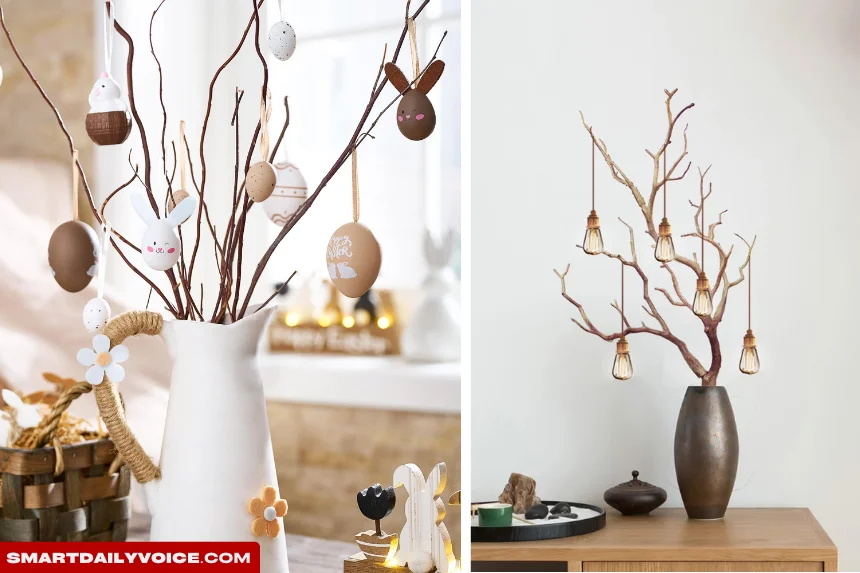
Pyntekvister are decorative branches or twigs used to bring natural texture, height, and quiet Scandinavian character into a room. If you have seen bare birch stems in a tall vase, willow branches with small lights, or a simple branch styled on a dining table, you already understand the basic idea. The word is niche in English, but the decor technique is familiar: use branches intentionally, not randomly, so they feel like part of the room instead of something dropped in from the garden. This guide explains what pyntekvister means, where the term comes from, which branches work best, how to prepare them indoors, and how to style them through the seasons without making your home look cluttered or overdecorated.
What Does Pyntekvister Mean?
Pyntekvister means decorative branches or ornamental twigs used for styling a home. The word can be understood through Scandinavian language roots: pynte means to decorate or adorn, and kvist means twig or small branch. In an interior design context, pyntekvister usually refers to branches arranged in vases, hung on walls, used in table displays, or decorated with lights and seasonal ornaments.
The term is most useful for English readers when translated as decorative branches. It does not need to describe a complicated craft. A single sculptural branch in a handmade ceramic vase can count as pyntekvister if the branch is chosen and placed with decorative intent. The difference between random sticks and pyntekvister is curation: shape, scale, vessel, placement, and restraint matter.
Dictionary evidence supports this interpretation. Cambridge translates the Norwegian verb pynte as to adorn or decorate, while Ordbokene and Cambridge define kvist as a small branch or twig. That makes pyntekvister a natural compound for decorated or decorative twigs. Because the full compound is not always listed in English dictionaries, articles should avoid overclaiming that it is a globally standardized design category. It is better to define it clearly and use it as a Scandinavian-style home decor term.
Is Pyntekvister Norwegian, Danish, or Scandinavian?
Pyntekvister is best described as a Scandinavian-language decor term, with strong Norwegian roots. Norwegian dictionaries connect pynte with decorating and kvist with a twig or small branch. Danish also uses pynte around decoration and kvist for branch-related meanings, so English-language readers may see the word described broadly as Scandinavian rather than only Norwegian.

The safest wording is: pyntekvister is a Scandinavian-style term for decorative twigs or branches. That phrasing is accurate without forcing a narrow origin story. It also fits how the keyword is used online, where most searchers are not looking for a grammar lesson; they want to understand what the object is and how to use it at home.
Pyntekvister is not a mysterious product name. It is a practical word for decorative branches, built from familiar Scandinavian word parts related to decorating and twigs.
Why Pyntekvister Fits Scandinavian Interior Design
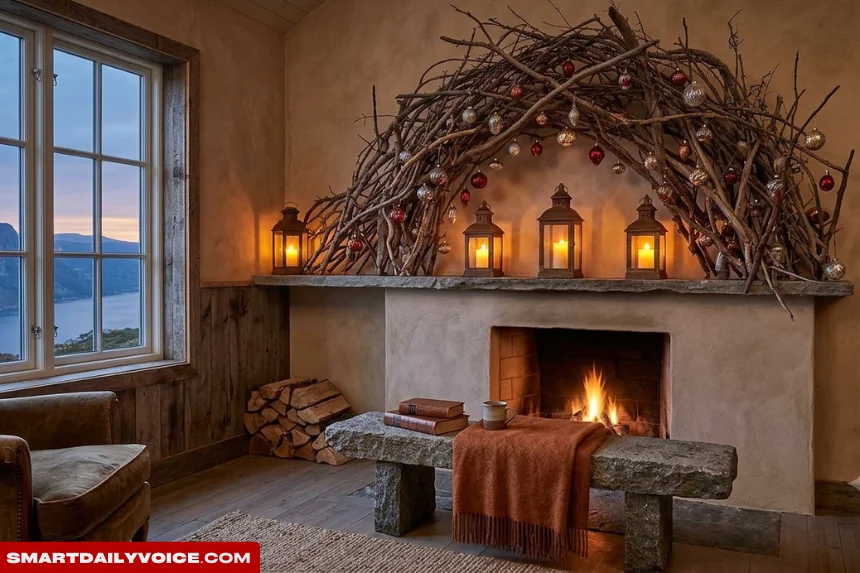
Pyntekvister fits Scandinavian interior design because it uses natural materials, simple forms, and minimal styling. Scandinavian rooms often rely on light, texture, pale wood, neutral colors, and uncluttered surfaces. A branch arrangement adds shape and warmth without adding visual noise, which is why it works well in calm living rooms, entryways, bedrooms, and dining spaces.

Better Homes & Gardens describes Scandinavian interior design as nature-inspired, simple, lightly textured, and intentionally minimal. Architectural Digest makes a similar point when discussing Japandi, noting that Japanese and Scandinavian interiors both value simplicity, natural materials, comfort, and a connection to nature. Pyntekvister sits comfortably inside that design language because it brings the outdoors in without requiring a large plant collection or expensive decor.
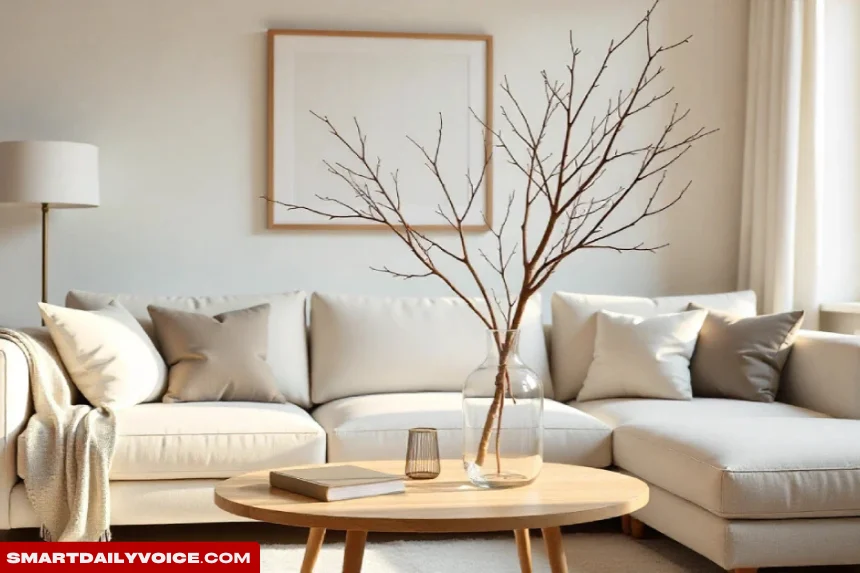
The practical reason it works is scale. A tall branch can fill an empty corner better than another small object on a shelf. A bare twig can make a table feel styled without blocking conversation. A few birch stems can soften a modern room that otherwise feels too flat or manufactured.
How to Use Pyntekvister in Home Decor
Pyntekvister can be used in vases, centerpieces, wall hangings, mantel displays, seasonal arrangements, and small shelf moments. The best arrangement usually has one clear job: add height, create a natural focal point, or mark a season. When you know the purpose, the branches are easier to choose and the final display looks intentional.
A tall vase is the easiest starting point. Use long birch, willow, hazel, or blossom branches in an entryway, beside a sofa, or in an empty corner. The vase should be heavy enough to balance the height. A narrow neck helps hold the branches upright, while a wide opening gives them a looser, more organic look.
For dining tables, keep the arrangement lower or airier. Thin twigs, dried grasses, or a single curved branch can work better than a dense bundle. People should be able to see across the table. For shelves, windowsills, or bathrooms, use one or two small stems instead of a full arrangement. Pyntekvister works best when it leaves breathing room around itself.
Quick Styling Rule
- Use tall branches where you need height, such as entryways, corners, and console tables.
- Use thin or airy branches where people need sightlines, such as dining tables and coffee tables.
- Use one sculptural stem in small rooms, bathrooms, and minimalist shelves.
- Use lights and ornaments only when the season or room mood calls for them.
Best Branches and Twigs for Pyntekvister
The best branches for pyntekvister have clear shape, clean bark, and enough strength to stand in a vase without collapsing. Birch, willow, hazel, cherry blossom, eucalyptus, pine, and dried grasses all work, but they create different moods. A pale birch branch feels Nordic and minimal; a twisted hazel branch feels sculptural; pine feels seasonal and wintery.
Choose branches by silhouette before color. A branch with natural movement often looks better than a perfectly straight one. Interior stylist Rikke Harker gives a similar styling principle for decorative branches: look for movement, choose an interesting vessel, avoid perfect symmetry, style stem by stem, and avoid overcrowding the vase.
| Branch Type | Best For | Practical Notes |
| Birch | Minimal Scandinavian styling | Pale bark, clean lines, good for tall vases and winter displays. |
| Willow | Soft movement | Flexible stems add curves; works well in entryways and corners. |
| Hazel | Sculptural arrangements | Twisted forms create a statement with very few stems. |
| Cherry blossom | Spring decor | Fresh cut branches can add seasonal softness and color. |
| Eucalyptus | Greenery and fragrance | Good for bathrooms, but use sparingly if scent is strong. |
| Pine or fir | Winter and holiday styling | Adds texture and scent; keep away from candles and heat. |
| Dried grasses | Soft boho or Japandi rooms | Lighter, calmer, and easier for smaller spaces. |
How to Make Pyntekvister at Home
You can make pyntekvister at home with clean fallen branches, garden trimmings, or stems from a florist. The process is simple, but cleaning and drying matter. Branches taken directly from outdoors can carry dirt, insects, moisture, or loose bark, so do not place them in a bedroom or on a dining table before inspecting them carefully.
Start with branches that are already dry or freshly cut from a safe, legal source. Avoid protected plants, private property, roadsides with heavy pollution, and branches that show mold, fungus, rot, or insect damage. If you are unsure what plant you have collected, keep the display simple and out of reach of children and pets.
DIY Checklist
- Choose fallen branches, pruned garden stems, or florist branches.
- Shake them outside and brush away dirt, spider webs, and loose bark.
- Inspect for insects, holes, mold, fungus, sap, or soft rotting areas.
- Trim the bottom ends with clean pruning shears so the height suits your vase.
- Let branches dry fully in a ventilated space before styling them indoors.
- Optional: lightly sand rough points or seal painted branches if you want a cleaner finish.
- Choose a heavy vase, jar, ceramic vessel, or weighted container.
- Arrange one stem at a time, then step back and adjust the angles.
Real vs Artificial Pyntekvister
Real pyntekvister feel authentic because every branch has a different line, knot, color, and bend. Artificial branches are more convenient, especially for people who do not want to clean or replace natural materials. Neither option is automatically better. The right choice depends on your home, maintenance tolerance, storage space, and whether you want a seasonal or permanent display.
Real branches are ideal for slow, natural, and low-cost decorating. Artificial branches are useful in rentals, offices, retail spaces, and homes where shedding bark or pollen would be annoying. Preserved stems sit between the two: they look more polished than found branches and last longer than fresh greenery, but they cost more.
| Option | Pros | Cons | Best Use |
| Real branches | Natural, unique, low-cost, sculptural | Need cleaning and drying; may shed | DIY styling, seasonal decor, natural homes |
| Dried branches | Long-lasting and lightweight | Can snap, gather dust, or look brittle | Tall vases, wall displays, table styling |
| Artificial branches | Reusable and predictable | Can look fake if too glossy or uniform | Busy homes, offices, hard-to-clean areas |
| Preserved stems | Polished, durable, often cleaner | More expensive than foraged branches | Formal rooms, weddings, long-term displays |
Seasonal Pyntekvister Ideas
Pyntekvister works especially well because it changes with the seasons. You do not need to buy a new set of decor every few months. Keep the same vase, change the branches or small accents, and the room feels refreshed. This is one reason decorative branches fit sustainable and minimalist homes: a small seasonal change creates a visible difference.
For spring, use budding branches, cherry blossom, or pale stems in a white or clear vase. For summer, keep the display lighter with airy twigs, dried grasses, or eucalyptus. Autumn works well with bare branches, berries, muted ribbons, and warm ceramics. Winter is the natural season for birch, pine, fir, paper stars, and warm micro lights.
| Season | Pyntekvister Idea | Best Room |
| Spring | Blossom branches in a clear glass or white ceramic vase | Dining room or entryway |
| Summer | Airy willow, grasses, or eucalyptus with minimal accessories | Living room or bathroom |
| Autumn | Bare branches with dried leaves, berries, or warm ribbons | Console table or mantel |
| Winter | Birch or pine branches with paper ornaments or warm fairy lights | Entryway, living room, or window area |
Pyntekvister Room-by-Room Styling Ideas
Room placement matters as much as branch choice. In a living room, pyntekvister can add height beside a sofa or soften a media wall. and a bedroom, one calm branch arrangement works better than a busy display because bedrooms need rest, not visual stimulation.
In a bathroom, eucalyptus or a single dried stem can add spa-like texture, but avoid placing branches where they will stay damp, and a home office, keep the arrangement simple and off to the side; it should support focus, not distract from the desk.
| Room | Best Approach | Example |
| Living room | Use height and sculptural lines | A tall hazel branch beside a sofa or console table |
| Bedroom | Keep the display quiet and minimal | One pale branch in a matte vase on a dresser |
| Kitchen | Use small, clean stems away from food prep | A narrow vase on open shelving |
| Dining room | Keep branches airy and low enough for conversation | Thin stems with small paper ornaments |
| Bathroom | Choose moisture-tolerant or replaceable stems | Eucalyptus or a single dried grass bundle |
| Home office | Place natural shape in peripheral view | One curved branch on a bookcase |
| Entryway | Create a vertical welcome moment | Birch branches in a heavy floor vase |
Common Mistakes to Avoid
The most common mistake with pyntekvister is using too many branches. Natural decor loses its calm effect when the vase becomes crowded. Another mistake is ignoring scale. A tiny vase with giant branches can tip over, while short branches in a large floor vase can look accidental. The arrangement should match the height, weight, and openness of the room.
Do not bring damp, moldy, or insect-damaged branches indoors.Do not cover every branch with ornaments unless you want a holiday tree effect. Pyntekvister is strongest when the branch shape remains visible.
- Using branches that are too short or too tall for the vessel.
- Choosing a lightweight vase that can tip over.
- Skipping cleaning and drying before indoor display.
- Mixing too many colors, ribbons, lights, and ornaments at once.
- Putting dried branches close to open flames or high heat.
- Ignoring the room style and using a branch arrangement that feels visually heavier than the space.
- Copying a photo exactly instead of adjusting scale for your own room.
Is Pyntekvister Eco-Friendly?
Pyntekvister can be eco-friendly when you use fallen branches, pruned garden material, local florist stems, or reusable dried arrangements. The environmental benefit comes from reducing plastic decor, reusing natural materials, and avoiding unnecessary seasonal purchases. A branch display that can be composted or restyled is usually less wasteful than disposable decorations.
The eco-friendly version is also the responsible version. Do not cut branches from protected trees, public parks, or private land without permission. Avoid glitter, plastic sprays, and single-use ornaments if sustainability is the goal. If you paint branches, use the minimum finish needed and let them cure fully before bringing them indoors.
Pyntekvister and Biophilic Design
Biophilic design is the practice of connecting indoor spaces with nature through natural materials, views, light, plants, organic shapes, and sensory experiences. Pyntekvister supports this idea in a simple way: branches add real natural form and texture to a room without requiring major renovation or expensive furniture.
Terrapin Bright Green’s 14 Patterns of Biophilic Design framework describes relationships between nature, human biology, and the built environment. Decorative branches are not a complete wellness strategy by themselves, but they can contribute to visual connection with nature and natural analogues through shape, texture, and material. This is why a quiet branch arrangement can make a room feel less sterile even when the rest of the decor is minimal.
Pyntekvister is not just about putting sticks in a vase. When used thoughtfully, decorative branches give a room natural shape, seasonal rhythm, and a small connection to the outdoors.
Pyntekvister Style Ideas by Interior Theme
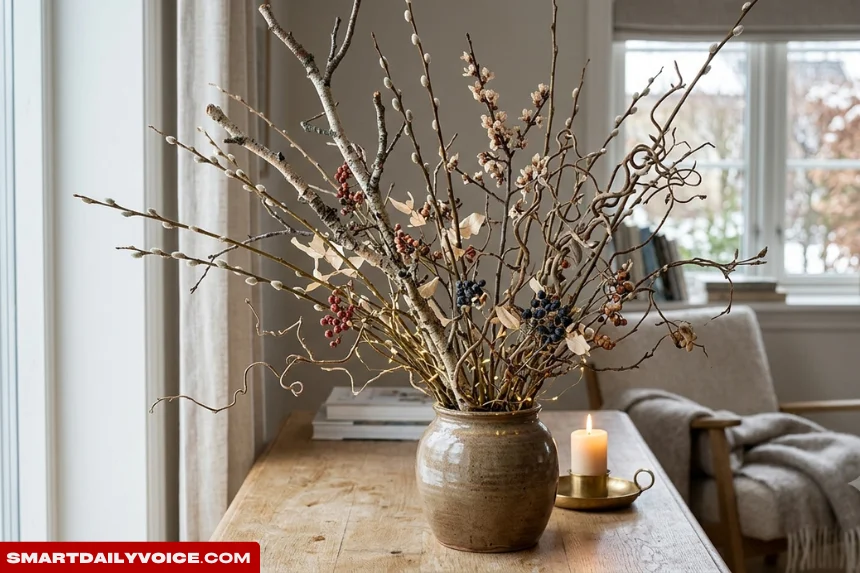
Pyntekvister is flexible because the same branch can feel Scandinavian, rustic, modern, holiday, or Japandi depending on the vessel and accessories. A pale branch in a white ceramic vase feels Nordic. The same branch in a black metal vessel feels modern. A crooked branch with dried flowers feels rustic or boho. This makes the idea useful for many homes, not only homes that are strictly Scandinavian.
The key is to match the branch treatment to the room’s design language. Minimal rooms need fewer stems and quieter colors. Rustic rooms can handle more texture. Japandi rooms benefit from asymmetry, natural imperfections, clay vessels, and restrained styling. Holiday rooms can handle lights, paper stars, or ornaments, but the best displays still leave the branch visible.
| Interior Style | How to Style Pyntekvister |
| Scandinavian | Pale birch, white or stoneware vase, minimal ornaments, plenty of negative space. |
| Japandi | One asymmetrical branch, clay vase, natural texture, no clutter. |
| Rustic | Twigs, dried flowers, woven baskets, warm wood tones. |
| Modern | Dark branch, matte black or concrete vessel, clean lines. |
| Boho | Dried grasses, beads, feathers, linen, soft layers. |
| Holiday | Pine, birch, paper stars, warm micro lights, simple ornaments. |
Quick Pyntekvister Care Tips
Pyntekvister is low-maintenance, but it is not maintenance-free. Dust branches gently with a dry microfiber cloth, feather duster, or low-suction vacuum attachment. Replace stems that shed heavily, smell musty, or develop visible spots. Keep dried arrangements away from damp corners, humid bathrooms, and heat sources.
For storage, wrap seasonal branches loosely in paper and keep them in a dry box. Do not crush delicate twigs under heavy ornaments or holiday bins. If you use lights, choose low-heat LED string lights and check wires before reuse. Small safety habits keep natural decor beautiful without turning it into a household problem.
A Simple Pyntekvister Setup for Beginners
For a first arrangement, choose three to five branches that are roughly one-and-a-half to two times the height of your vase. Use a heavy ceramic or glass vessel with a narrow enough opening to support the stems. Trim the bottom ends at slightly different lengths so the top line does not look flat. Place the tallest branch first, then add the others at gentle angles.
Stop before the vase feels full. The easiest beginner mistake is adding one more branch, then one more ornament, then one more ribbon. Pyntekvister is most elegant when the eye can follow each line. If the arrangement looks too busy, remove the weakest branch rather than adding more decoration.
Conclusion
Pyntekvister is a simple idea with a lot of practical value: decorative branches, chosen carefully and styled with restraint, can make a room feel calmer, warmer, and more connected to nature. The best arrangements are not complicated. They use clean branches, a stable vessel, the right scale, and a clear purpose.
Start with one vase, one room, and a few well-shaped stems. Once you see how much height and texture branches add, you can adapt the idea for spring blossoms, summer greenery, autumn twigs, or winter lights without buying a new set of decor every season.
FAQs About Pyntekvister
What does pyntekvister mean?
Pyntekvister means decorative branches or ornamental twigs used in home decor. The term combines the idea of decorating with the idea of twigs or small branches, making it a useful word for branch arrangements in Scandinavian-style interiors.
Is pyntekvister a real word?
Pyntekvister is best understood as a Scandinavian-style compound term. Even if English dictionaries do not commonly list the full word, its parts are supported by Norwegian and Danish word roots related to decoration and twigs.
Is pyntekvister Norwegian?
Pyntekvister has strong Norwegian roots because pynte means to decorate and kvist means twig or small branch in Norwegian. Danish and other Scandinavian language connections also make it reasonable to describe it broadly as a Scandinavian decor term.
What are pyntekvister used for?
Pyntekvister are used for vases, centerpieces, wall decor, holiday displays, entryway arrangements, and minimalist room styling. Their main purpose is to add height, natural texture, and seasonal character without adding clutter.
Can I make pyntekvister at home?
You can make pyntekvister at home using clean fallen branches, garden trimmings, or florist stems. The important steps are inspecting, cleaning, drying, trimming, and placing the branches in a stable vessel.
Discover more on our website about lionel-richie-net-worth