




Businesses might use cognitive biases to their advantage by understanding how people make decisions and then designing better marketing, pricing, products, sales messages, and customer experiences around those patterns. Cognitive biases are mental shortcuts that influence how people judge value, trust, risk, urgency, and choices.
Used ethically, cognitive biases can help customers make faster and clearer decisions. A business can show real reviews, simplify pricing, highlight useful defaults, reduce uncertainty, and frame benefits in a way customers understand. Used poorly, the same biases can become manipulation through fake urgency, hidden fees, confusing cancellation flows, misleading discounts, or pressure-based sales tactics.
The best approach is simple: use cognitive biases to make honest decisions easier, not to trick people into choices they would regret.
Quick Answer
Businesses use cognitive biases to their advantage by designing messages, offers, and experiences that match how people naturally think. Customers do not always compare every option logically. They often respond to reviews, first prices, limited availability, expert proof, simple choices, and the fear of missing out.
Common business uses include:

- Showing customer reviews to build trust
- Using limited-time offers to create urgency
- Setting price anchors to shape value perception
- Offering guarantees to reduce fear of loss
- Framing benefits in a clear and positive way
- Highlighting expert approval or certifications
- Giving free samples or useful resources
- Setting helpful default options
- Using case studies and stories to make value memorable
The ethical version helps customers understand value and act with confidence. The unethical version hides information, creates false pressure, or manipulates people into decisions that benefit only the business.
Businesses can use cognitive biases to improve sales and decision-making, but they should do it honestly and transparently.
What Are Cognitive Biases?
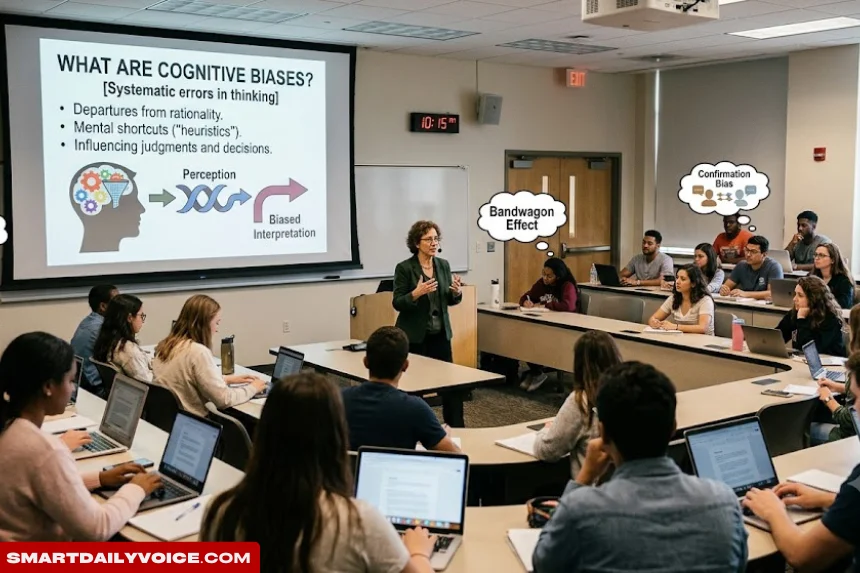
Cognitive biases are thinking patterns that affect how people process information and make decisions. They often work like mental shortcuts. These shortcuts help people decide quickly, but they can also lead to mistakes.

For example, a customer may choose a product because it has many positive reviews. Another customer may think a $99 product is cheap because they first saw a similar product priced at $199. A manager may support a business idea because it confirms what they already believe.
Cognitive biases affect:
- Customers
- Business owners
- Marketers
- Sales teams
- Managers
- Investors
- Hiring teams
- Product designers
- Negotiators
- Customer support teams
They matter because business decisions are not purely rational. People respond to emotion, context, memory, trust, fear, habit, and social influence.
Cognitive biases are mental shortcuts that shape how people judge choices, prices, risks, and value.
Why Cognitive Biases Matter in Business
Cognitive biases matter because they influence nearly every part of business. They affect what customers buy, how employees decide, how leaders plan, and how teams judge risks.
In pricing, they affect what feels expensive or affordable and In sales, they influence trust and urgency. Product design, they affect which button people click, and hiring, they can create unfair judgments. In strategy, they can lead leaders to overconfidence or bad forecasts.
Businesses that understand cognitive biases can:
- Improve customer experience
- Make offers easier to understand
- Increase conversion rates
- Reduce decision friction
- Improve pricing strategy
- Build stronger trust
- Create better sales conversations
- Make internal decisions more objective
- Reduce hiring and management mistakes
The goal should not be to exploit customers. The better goal is to understand human behavior and design clearer, fairer, and more persuasive experiences.
Cognitive biases matter because people buy, compare, trust, and decide through mental shortcuts.
1. Social Proof
Social proof is the tendency to trust something more when other people already trust it. Customers often feel safer choosing a product, service, or brand when they see that others have had a good experience.
Businesses use social proof through:
- Reviews
- Testimonials
- Case studies
- Star ratings
- User counts
- “Best seller” labels
- Client logos
- Before-and-after examples
- Customer success stories
- Social media mentions
For example, a software company may show that thousands of teams use its platform. A restaurant may highlight positive customer reviews. A service business may publish a case study showing how it helped a client solve a problem.
Social proof works because people often use others’ actions as a signal of quality. If many people trust a business, new customers may feel less risk.
Ethical warning: social proof should be real. Fake reviews, fake customer counts, or misleading testimonials can damage trust and create legal or reputational risk.
Social proof helps businesses build trust by showing that real customers already value the product or service.
2. Scarcity Bias
Scarcity bias makes people value something more when it seems limited. If a product, seat, appointment, or offer may run out, customers may act faster.
Businesses use scarcity through:
- Limited stock alerts
- Limited-time offers
- Event seat limits
- Seasonal products
- Small-batch launches
- Early-bird pricing
- Appointment availability
- Exclusive memberships
- Limited edition products
For example, a training company may offer only 30 seats for a live workshop. A hotel may show limited room availability. A clothing brand may release a limited seasonal collection.
Scarcity can help customers act when the limit is real. It reduces delay and makes the decision feel more urgent.
Ethical warning: fake scarcity is manipulative. A countdown timer that resets every time a user visits the page can break trust. A “only 2 left” message should reflect real inventory.
Scarcity can increase action, but businesses should only use it when the limit is genuine.
3. Anchoring Bias
Anchoring bias happens when people rely too heavily on the first number or piece of information they see. In business, the first price often becomes the reference point for judging value.
Businesses use anchoring through:
- Original price vs sale price
- Pricing tiers
- Premium package placement
- Quote comparisons
- “Starting at” prices
- Bundles
- Enterprise pricing
- Suggested retail price
- Good-better-best offers
For example, if a customer first sees a premium package priced at $499, a $199 package may feel more affordable. If a product shows an original price of $120 and a sale price of $79, the original price becomes the anchor.
Anchoring helps customers understand relative value. It can make pricing easier to compare.
Ethical warning: do not use fake inflated prices. If the original price was never real, the anchor becomes misleading.
Anchoring shapes how customers judge price by giving them a reference point.
4. Loss Aversion
Loss aversion means people often feel the pain of losing something more strongly than the pleasure of gaining something. In business, this affects how customers respond to risk, deadlines, and missed opportunities.
Businesses use loss aversion through:
- Free trials ending soon
- “Don’t lose your discount” reminders
- Money-back guarantees
- Risk-free trials
- Cart abandonment emails
- Insurance or protection plans
- Renewal reminders
- Limited bonus offers
- “Save your progress” messages
For example, a software company may remind users that their trial data or premium features will disappear when the trial ends. A retailer may remind customers that a discount expires soon.
Loss aversion can help people avoid missing something they genuinely want. It can also reduce risk when businesses offer guarantees.
Ethical warning: avoid fear-based pressure. Do not exaggerate danger or make customers feel trapped.
Loss aversion helps businesses show what customers may miss, but it should not become fear-based manipulation.
5. Framing Effect
The framing effect means people react differently depending on how information is presented. The facts may stay the same, but the wording changes the decision.
Businesses use framing through:
- Benefit-focused headlines
- Savings messages
- Risk reduction
- Positive wording
- Clear comparisons
- Product bundles
- Plan names
- Guarantee language
- Before-and-after messaging
For example, “Save $200 today” may feel more powerful than “Pay $799.” A fitness brand may say “30 minutes a day to feel stronger” instead of “exercise program.” A SaaS company may frame a higher plan as “best for growing teams” rather than simply “expensive.”
Framing helps customers understand why an offer matters. It can turn technical features into meaningful benefits.
Ethical warning: framing should not hide downsides. If an offer has limits, fees, or risks, the business should explain them clearly.
Framing helps businesses present the same facts in a clearer and more persuasive way.
6. Authority Bias
Authority bias makes people more likely to trust experts, leaders, certifications, or respected institutions. Customers often feel safer when a business shows credible authority.
Businesses use authority bias through:
- Expert endorsements
- Certifications
- Awards
- Industry credentials
- Media mentions
- Founder expertise
- Scientific references
- Professional licenses
- Security badges
- Medical, legal, or financial qualifications
- Well-known partners
For example, a cybersecurity company may highlight security certifications. A skincare brand may feature dermatologist input. A consulting firm may show the founder’s industry experience.
Authority reduces uncertainty. It tells customers that someone credible supports the product or service.
Ethical warning: authority claims must be true. Fake awards, vague “expert approved” claims, or exaggerated credentials can mislead customers.
Authority bias helps businesses build trust by showing real expertise and credibility.
7. Reciprocity Bias
Reciprocity bias means people often feel more willing to give something back after they receive value. In business, giving useful help first can build trust and goodwill.
Businesses use reciprocity through:
- Free samples
- Free guides
- Free audits
- Free trials
- Helpful newsletters
- Educational webinars
- Templates
- Checklists
- Consultations
- Product demos
- Bonus resources
For example, a marketing agency may offer a free website audit. A software company may offer a free trial. A food brand may give free samples in a store.
Reciprocity works best when the free value is genuinely useful. It helps customers experience the business before they buy.
Ethical warning: free value should not become a trap. Do not hide automatic charges, make cancellation difficult, or use guilt-based pressure.
Reciprocity helps businesses earn trust by giving useful value before asking for a sale.
8. Default Effect
The default effect means people often stick with the option already selected or recommended. Defaults are powerful because many customers do not want to spend extra time comparing every setting.
Businesses use defaults through:
- Recommended plans
- Preselected settings
- Standard delivery options
- Suggested subscription plans
- Auto-save features
- Default privacy settings
- Default payment frequency
- Recommended bundles
- Pre-filled forms
For example, a software company may label one plan as “recommended.” A checkout page may default to standard shipping. A productivity app may use default notification settings.
Helpful defaults reduce friction. They guide customers toward the option that fits most users.
Ethical warning: defaults must be fair. Preselecting expensive add-ons, hiding opt-outs, or making cancellation hard can become a dark pattern.
Defaults can simplify choices, but businesses should use them to help customers, not trap them.
9. Confirmation Bias
Confirmation bias means people notice and accept information that supports what they already believe. Customers often look for proof that confirms their concerns, preferences, or goals.
Businesses use confirmation bias through:
- Buyer-specific landing pages
- Testimonials by customer type
- Objection-handling content
- Comparison pages
- Case studies for different industries
- Personalized messaging
- Reviews that match common concerns
- Product demos focused on known pain points
For example, a small business owner who already believes social media is time-consuming may respond to a tool that says, “Plan a month of content in one afternoon.” A customer worried about quality may respond to testimonials about durability and support.
This works because the message feels personally relevant.
Ethical warning: businesses should not reinforce harmful beliefs or spread false information just because customers want to hear it.
Confirmation bias helps businesses match messages to what customers already care about, but the claims must stay honest.
10. Availability Bias
Availability bias means people judge something as more important or likely when it is easy to remember. Vivid stories, recent examples, and strong visuals can influence decisions more than dry data.
Businesses use availability bias through:
- Memorable stories
- Case studies
- Visual examples
- Before-and-after images
- Recent trend references
- Customer success stories
- Product demonstrations
- Simple examples
- Emotional storytelling
For example, a cybersecurity company may tell a clear story about how one business avoided a data breach. A fitness brand may show a customer transformation. A design agency may show before-and-after branding work.
Availability helps customers understand value quickly. Stories are easier to remember than abstract claims.
Ethical warning: do not exaggerate rare risks or use emotional stories to distort reality. A memorable example should support the truth, not replace it.
Availability bias helps businesses make value memorable through examples, stories, and proof.
11. Status Quo Bias
Status quo bias means people often prefer to keep things as they are. Change feels risky, even when the current situation is not ideal.
Businesses use status quo bias by reducing the fear of switching.
Useful tactics include:
- Easy onboarding
- Migration support
- Free setup
- Step-by-step guides
- Cancel-anytime plans
- Low-risk trials
- Clear comparison pages
- Customer support during transition
- Switching checklists
- Guarantees
For example, a software company may say, “We’ll migrate your data for free.” A bank may offer switching support. An agency may provide a clear onboarding timeline.
The goal is to make change feel safe and simple.
Ethical warning: do not use status quo bias to trap existing customers. Making cancellation difficult may boost short-term retention but damage trust.
Status quo bias helps businesses understand why customers hesitate and how to make switching easier.
12. Decoy Effect
The decoy effect happens when a third option makes another option look more attractive. Businesses often use this in pricing tiers.
For example:
| Plan | Price | Purpose |
|---|---|---|
| Basic | $19/month | Low-cost option |
| Pro | $49/month | Best value |
| Premium | $59/month | Makes Pro look attractive or offers extra value |
A decoy option can help customers compare value. It can guide them toward the plan that fits most users.
This works well when pricing is clear and the middle or recommended plan genuinely gives strong value.
Ethical warning: do not create confusing plans only to push people into paying more. The comparison should help customers choose, not confuse them.
The decoy effect helps structure pricing so customers can compare options more easily.
How Businesses Can Use Cognitive Biases in Marketing
Marketing uses cognitive biases to make messages clearer, more relevant, and more persuasive.
Examples include:
- Social proof in testimonials
- Scarcity in real limited-time offers
- Anchoring in pricing pages
- Framing in headlines
- Authority in expert endorsements
- Reciprocity in free resources
- Availability in storytelling
- Loss aversion in reminder emails
- Confirmation bias in segmented landing pages
A strong marketing campaign does not simply push people to buy. It helps customers understand the problem, trust the solution, and feel confident taking action.
Marketing can use cognitive biases to make offers easier to understand and more trustworthy.
How Businesses Can Use Cognitive Biases in Pricing
Pricing is one of the strongest areas for cognitive bias. Customers rarely judge price in isolation. They compare it with anchors, alternatives, benefits, and perceived risk.
Businesses can use pricing psychology through:
- Good-better-best pricing
- Annual vs monthly price framing
- Original price vs sale price
- Bundles
- Recommended plans
- Free trials
- Money-back guarantees
- Price comparison tables
- Premium anchors
- Simple plan names
For example, showing annual savings can make a yearly subscription feel more attractive. A guarantee can reduce fear. A premium plan can make the standard plan feel more reasonable.
Ethical pricing should stay clear. Customers should understand what they pay, what they get, and what happens after a trial ends.
Businesses can use biases in pricing by creating fair comparisons, clear anchors, and lower-risk offers.
How Businesses Can Use Cognitive Biases in Sales
Sales teams can use cognitive biases to build trust and reduce hesitation. The best salespeople do this by helping customers make informed decisions.
Useful sales applications include:
- Using case studies as social proof
- Setting clear price anchors
- Explaining the cost of inaction
- Offering guarantees or pilot programs
- Showing expert credibility
- Reframing objections
- Using clear next steps
- Creating real urgency around deadlines
- Highlighting relevant customer examples
For example, a B2B salesperson may say, “A similar company reduced onboarding time by 30% after switching.” That gives the prospect a concrete example and reduces uncertainty.
Ethical warning: sales teams should avoid fake deadlines, false claims, or pressure tactics. Trust creates better long-term revenue than manipulation.
Sales teams can use biases to reduce uncertainty, but they should stay honest and helpful.
How Businesses Can Use Cognitive Biases in Product Design
Product design uses cognitive biases to make choices easier and experiences smoother.
Examples include:
- Helpful default settings
- Clear call-to-action buttons
- Progress bars
- Recommended options
- Simple navigation
- Trust badges
- Social proof near sign-up
- Easy cancellation
- Step-by-step onboarding
- Clear error messages
For example, a progress bar during checkout can motivate users to finish because they can see how close they are. A recommended plan can help users avoid decision overload. A simple onboarding flow can reduce status quo bias.
Ethical design helps people complete tasks they already want to complete. Manipulative design pushes people into choices they do not understand.
Product teams can use biases to reduce friction and guide users through helpful choices.
How Businesses Can Use Cognitive Biases Internally
Cognitive biases do not only affect customers. They also affect business leaders and teams.
Internal biases can lead to:
- Bad hiring decisions
- Poor forecasting
- Overconfidence
- Groupthink
- Ignoring negative data
- Following sunk costs
- Overvaluing recent events
- Choosing familiar ideas
- Misreading customer feedback
- Poor investment decisions
Businesses can reduce internal bias through:
- Decision checklists
- Pre-mortem meetings
- Diverse viewpoints
- Blind resume screening
- Clear hiring scorecards
- Data reviews
- Red-team challenges
- Customer research
- A/B testing
- Written decision logs
- Independent financial review
For example, a company may run a pre-mortem before launching a product. The team asks, “Imagine this failed. What caused the failure?” This helps uncover risks before money is wasted.
Businesses can use bias awareness to improve internal decisions, not only customer-facing marketing.
Ethical vs Unethical Use of Cognitive Biases
The difference between persuasion and manipulation is honesty. Ethical persuasion helps people make decisions with clear information. Manipulation hides information or pushes people against their own interests.
| Ethical use | Unethical use |
|---|---|
| Real testimonials | Fake reviews |
| Real limited stock | Fake countdown timers |
| Clear pricing tiers | Hidden fees |
| Helpful defaults | Trapping users |
| Honest guarantees | Fear-based pressure |
| Clear subscription terms | Hard-to-cancel subscriptions |
| Expert credentials | Fake authority claims |
| Useful free trial | Surprise billing |
| Accurate urgency | Manufactured pressure |
| Transparent comparisons | Misleading price anchors |
A business should ask:
- Is the claim true?
- Is the limit real?
- Can the customer easily understand the offer?
- Can the customer say no?
- Are fees clear?
- Is cancellation fair?
- Would we be comfortable explaining this tactic publicly?
Ethical use of cognitive biases builds trust. Unethical use damages customers and the brand.
Examples by Business Type
Ecommerce
Ecommerce stores use reviews, best-seller tags, real stock limits, product comparisons, and bundles to help customers choose.
SaaS
SaaS companies use free trials, recommended plans, onboarding defaults, case studies, and annual savings messages.
Restaurants
Restaurants use menu placement, social proof, limited seasonal items, and chef recommendations.
Agencies
Agencies use case studies, client logos, strategy audits, authority content, and tiered packages.
Real Estate
Real estate businesses use scarcity, neighborhood proof, price anchoring, and urgency around offers.
Healthcare
Healthcare businesses use authority, trust signals, clear explanations, and risk-reduction messaging. They must avoid fear-based claims and unsupported promises.
Financial Services
Financial businesses use framing, loss aversion, expert authority, and risk comparisons. They must be especially careful because misleading claims can cause serious harm.
Different industries use different biases, but the best uses stay truthful and helpful.
Common Mistakes Businesses Should Avoid
Businesses often misuse cognitive biases because they focus only on short-term conversions.
Avoid these mistakes:
- Faking scarcity
- Using fake reviews
- Hiding cancellation terms
- Creating confusing pricing
- Overusing urgency
- Making claims without proof
- Using fear-based pressure
- Making opt-outs hard
- Using too many choices
- Ignoring customer trust
- Reinforcing false beliefs
- Treating all customers the same
- Copying dark patterns from competitors
- Measuring only clicks, not customer satisfaction
A tactic that increases conversion today may reduce retention tomorrow. Trust is a business asset.
Do not trade long-term trust for short-term tricks.
Quick Facts
| Question | Short answer |
|---|---|
| What are cognitive biases? | Mental shortcuts that shape decisions |
| Can businesses use them? | Yes, ethically and transparently |
| Best bias for trust | Social proof |
| Best bias for pricing | Anchoring |
| Best bias for urgency | Scarcity |
| Best bias for risk reduction | Loss aversion |
| Best bias for UX | Default effect |
| Biggest ethical risk | Manipulation |
| Best internal use | Better decision-making |
| Worst use | Fake urgency, hidden fees, and dark patterns |
Cognitive biases can improve business results when they make decisions clearer and fairer.
Sources and Further Reading
Use these sources to learn more about cognitive biases, decision-making, and ethical choice design:
- Investopedia guide to cognitive bias in business
- Harvard Business Review article on outsmarting biases
- Nielsen Norman Group article on decision framing and UX
- FTC report on dark patterns
- OECD guidance on dark commercial patterns
FAQs
How might businesses use cognitive biases to their advantage?
Businesses can use cognitive biases to improve marketing, pricing, sales, product design, and decision-making. They may use social proof, scarcity, anchoring, framing, authority, reciprocity, and helpful defaults to make choices easier.
The ethical goal is to help customers make informed decisions, not manipulate them.
What is an example of cognitive bias in marketing?
A common example is social proof. A business may show real customer reviews, testimonials, or case studies to help new buyers trust the offer.
Another example is scarcity, such as a real limited-time event or limited stock notice.
Is using cognitive bias in business unethical?
Using cognitive bias is not automatically unethical. It becomes unethical when a business hides information, fakes urgency, uses fake reviews, creates confusing choices, or pressures people into decisions they would not make with clear information.
Ethical use should be truthful, transparent, and helpful.
What cognitive bias helps increase sales?
Several biases can help sales, including social proof, scarcity, anchoring, loss aversion, authority bias, and reciprocity.
The best bias depends on the offer, customer, and buying situation.
How does anchoring affect pricing?
Anchoring affects pricing by giving customers a reference point. If a customer first sees a higher-priced option, a lower-priced option may feel more affordable.
Businesses often use pricing tiers, original prices, and premium plans as anchors.
How does social proof help businesses?
Social proof helps businesses by reducing customer uncertainty. When people see that others have bought, reviewed, or recommended a product, they may feel safer choosing it.
Real reviews and case studies are common examples.
What is the difference between persuasion and manipulation?
Persuasion uses truthful information to help someone decide. Manipulation hides important details, creates false pressure, or pushes people into choices against their interests.
The difference is honesty, transparency, and respect for the customer.
Can cognitive biases hurt business decisions?
Yes. Cognitive biases can cause leaders to ignore data, overestimate demand, hire unfairly, continue bad projects, or follow groupthink.
Businesses can reduce these risks with checklists, diverse viewpoints, data reviews, and structured decision processes.
What is an example of ethical scarcity?
An ethical scarcity example is a workshop with only 25 real seats because the instructor wants to give personal feedback.
An unethical example is a fake countdown timer that resets every time someone visits the page.
What is the default effect in business?
The default effect means people often accept the option already selected or recommended. Businesses use this in recommended plans, standard shipping, account settings, and onboarding flows.
Defaults should help customers, not trap them.
Conclusion
Businesses can use cognitive biases to their advantage by understanding how people actually make decisions. Customers do not judge every option with perfect logic. They respond to trust, urgency, price anchors, framing, expert proof, free value, defaults, stories, and the fear of loss.
Used ethically, cognitive biases can improve customer experience and business results. They can make offers clearer, reduce hesitation, build trust, and help customers act on real needs. Used dishonestly, they become manipulation through fake scarcity, hidden fees, fake reviews, and dark patterns.
The best businesses use behavioral psychology with responsibility. They persuade with truth, design with clarity, and build trust instead of exploiting confusion.
Discover more on our website about creative agency business model revenue structure