





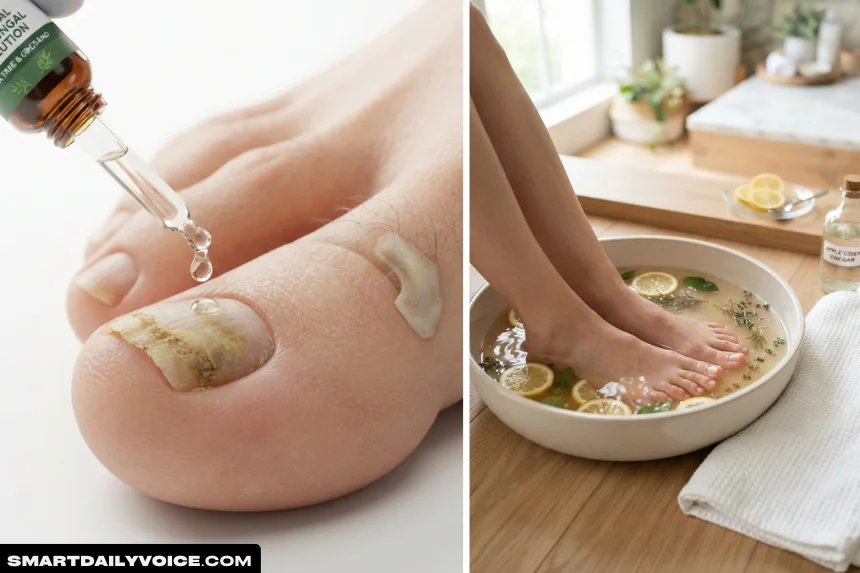
The safest toenail fungus home remedy is not a vinegar or bleach soak. Instead, use consistent nail care, keep your feet dry, treat any athlete’s foot and apply a proven antifungal nail medicine when a pharmacist or clinician recommends one.
Tea tree oil, mentholated ointments and vinegar have shown possible benefits in small studies. However, researchers still lack enough high-quality evidence to consider them dependable cures. Established toenail fungus often sits within and beneath the nail, where household products may not reach it effectively.
Before treating the nail, confirm that fungus is the likely cause. Psoriasis, repeated shoe pressure, injuries and other nail conditions can also produce thick, yellow or crumbly nails.
Mild infections may respond to a medicated nail lacquer used for many months. More extensive cases sometimes require prescription antifungal tablets. Therefore, seek medical advice when several nails are involved, the nail hurts, symptoms spread or you have diabetes, poor circulation or a weakened immune system.
Medical note: This guide provides general information and cannot confirm whether a nail change comes from fungus. A dermatologist, podiatrist, doctor or pharmacist can assess your individual situation.
Toenail Fungus Home Remedies at a Glance
| At-home option | What the evidence shows | Practical recommendation |
|---|---|---|
| Regular trimming and gentle filing | Helps control thickness but cannot remove all fungus | Useful alongside antifungal treatment |
| Keeping feet clean and dry | Reduces the warm, damp conditions fungi prefer | Recommended |
| Antifungal nail lacquer | Evidence-based treatment for selected mild infections | Ask a pharmacist or clinician |
| Treating athlete’s foot | Helps remove a source that can spread fungus to nails | Recommended |
| Tea tree oil | Small studies suggest possible benefit, but evidence remains insufficient | Do not rely on it as the main treatment |
| Mentholated ointment | Limited pilot studies show possible improvement | Not a proven cure |
| Vinegar soak | Evidence remains weak; prolonged or concentrated exposure can irritate skin | Generally not recommended as primary treatment |
| Baking soda or mouthwash | No strong clinical evidence proves that they clear infected nails | Do not delay effective treatment |
| Hydrogen peroxide | No dependable evidence supports it as a nail-fungus cure; it may irritate skin | Avoid repeated soaking |
| Bleach foot soak | Can irritate or burn skin and does not appear in standard treatment guidance | Do not use |
Home care can improve comfort, limit spread and support treatment. Nevertheless, it rarely eliminates an established infection by itself.

What Is Toenail Fungus?
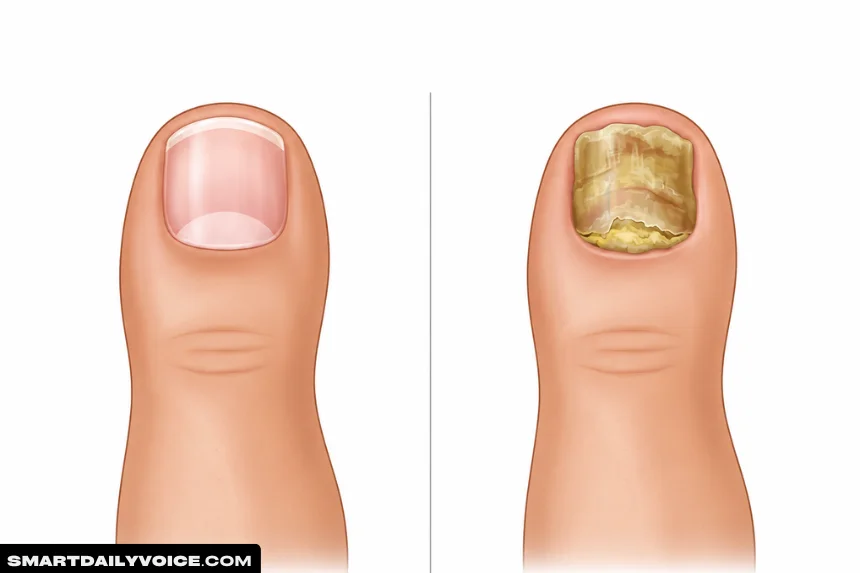
Toenail fungus, medically called onychomycosis, develops when fungi infect part of the nail unit. The infection often begins near the tip or side of a toenail and gradually spreads toward the base.
Common signs include:
- White, yellow, orange or brown discoloration
- Thickening
- Brittle or crumbly edges
- Debris beneath the nail
- A distorted nail shape
- Lifting from the nail bed
- Difficulty cutting the nail
- Pain when shoes press against it
The infection may affect one nail initially and later spread to others. Athlete’s foot can also act as a source because fungi on the surrounding skin may enter a damaged or cracked nail.
Make Sure It Is Actually Fungus
Not every thick or yellow toenail has a fungal infection.
Repeated trauma from tight shoes, psoriasis, eczema, aging and other nail disorders can resemble onychomycosis. Even scraping away debris cannot confirm the cause because fungi may live within the nail and the tissue beneath it.
A clinician may take nail clippings or scrape material from the nail for examination. Testing becomes especially valuable before oral treatment because antifungal tablets have potential side effects and drug interactions.
Consider professional confirmation when:
- Several nails have changed
- The whole nail looks thick or damaged
- Previous treatment failed
- You have psoriasis or another nail condition
- The nail has become painful
- You may need antifungal tablets
- The diagnosis remains uncertain
What Is the Best Home Remedy for Toenail Fungus?
The most useful at-home plan combines good nail care with an evidence-based antifungal treatment.
Follow these steps:
- Wash your feet and dry them carefully, including between the toes.
- Cut the affected nail straight across.
- Gently file excessive thickness without cutting into the skin.
- Apply the recommended antifungal nail medicine to a clean, dry nail.
- Use the medicine for the full recommended period.
- Put on clean socks every day.
- Rotate shoes so they have time to dry.
- Treat athlete’s foot promptly.
- Disinfect nail tools after each use.
- Avoid sharing clippers, towels, socks or footwear.
Filing can reduce thickness and may help topical medication reach the infected area. However, filing or scraping alone cannot remove fungi living inside and beneath the nail. The American Academy of Dermatology nail-fungus treatment guide explains why medication must penetrate the nail to clear the infection.
1. Keep the Nail Short and Manageable
Trim affected toenails straight across and keep them shorter than the ends of the toes.
Shorter nails collect less debris and may feel more comfortable inside shoes. In addition, reducing excessive thickness can help an antifungal nail treatment penetrate more effectively.
Use these precautions:
- Soften hard nails after a shower or brief warm-water wash.
- Use clean, sturdy toenail clippers.
- Cut small sections instead of forcing the clipper through a thick nail.
- Avoid digging into the nail’s sides.
- Stop if the nail or surrounding skin starts bleeding.
- Ask a podiatrist for help when the nail is too thick to cut safely.
People with diabetes, numbness, poor circulation or a history of foot ulcers should not aggressively file or trim a difficult nail without professional advice.
2. Keep Your Feet Clean and Dry
Fungi grow more readily in warm, damp environments. Therefore, reducing prolonged moisture can help limit spread and lower the risk of reinfection.
A practical daily routine includes:
- Washing the feet gently
- Drying between every toe
- Changing damp socks promptly
- Wearing clean socks each day
- Choosing breathable, well-fitting shoes
- Allowing shoes to dry before wearing them again
- Using shower sandals in shared changing rooms and pool areas
These measures support prevention, although they do not remove fungi already embedded inside the nail. The AAD prevention advice recommends moisture-wicking socks, breathable shoes and regular footwear drying.
3. Treat Athlete’s Foot at the Same Time
Athlete’s foot causes peeling, cracking, itching or burning skin, often between the toes. The same types of fungi can spread from the skin into a toenail.
Over-the-counter antifungal creams, powders or sprays can treat many cases of athlete’s foot when used according to the label. However, a skin cream does not usually penetrate deeply enough to cure fungus inside the nail.
For example, non-prescription terbinafine cream can treat fungal skin infections but cannot adequately penetrate an infected nail. Therefore, use skin treatment for athlete’s foot while following separate advice for the toenail.
4. Ask About an Antifungal Nail Medicine
A pharmacist or clinician may recommend a medicated solution or lacquer when the infection remains mild or superficial.
Depending on the product and country, you may need to apply it daily or weekly for six to 12 months. Consistent use matters because the medicine must remain in contact with the growing nail for an extended period.
The infection has not necessarily failed to clear simply because the old nail still looks discolored. Success appears as healthy nail growing from the base. A large toenail may need a year or longer to replace its damaged section completely.
Topical treatment tends to work best when:
- Only one or two nails are affected
- The infection has not reached most of the nail
- The nail root appears unaffected
- The nail is not extremely thick
- You can follow the routine for many months
Do not apply more frequently than directed. Extra applications may irritate the surrounding skin without improving penetration.
Does Tea Tree Oil Cure Toenail Fungus?
Tea tree oil has antifungal activity in laboratory settings, and several small clinical studies have examined its use on infected nails. However, the available studies remain too small and inconsistent to prove that tea tree oil reliably cures onychomycosis.
The American Academy of Dermatology states that tea tree oil may provide some benefit, yet researchers still need larger studies to establish effectiveness and possible side effects. A systematic review of complementary treatments reached a similar conclusion.
Tea tree oil may also irritate the skin or cause an allergic reaction. Therefore:
- Do not apply it to broken or inflamed skin.
- Stop using it if burning, redness, swelling or a rash develops.
- Keep it away from children and pets.
- Never swallow it.
- Do not replace prescribed treatment with it.
Someone who chooses to try tea tree oil should view it as an uncertain complementary measure, not a confirmed cure.
Does Vicks VapoRub Work for Toenail Fungus?
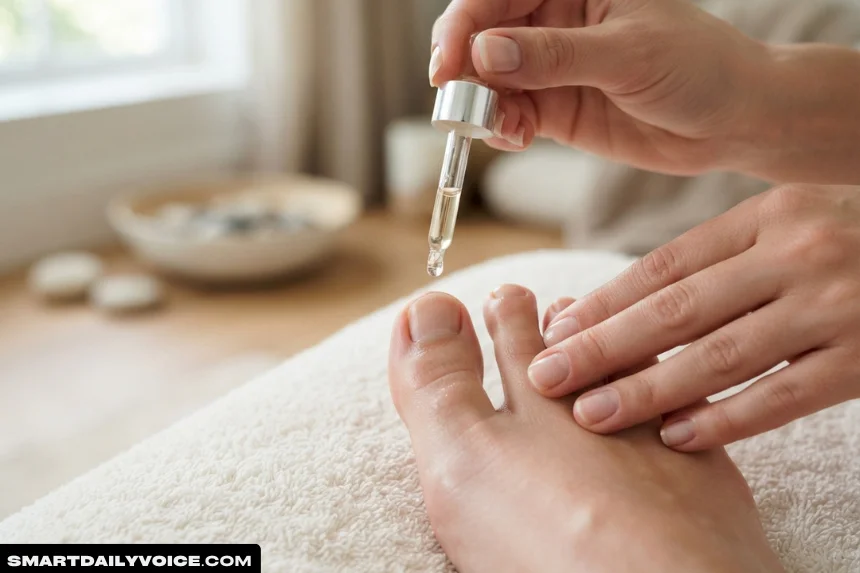
Mentholated cough ointments have produced possible improvement in a few small studies, including a pilot study with a limited number of participants. However, those studies do not provide enough evidence to establish a dependable cure rate.
Dermatologists therefore do not consider mentholated ointment equivalent to an approved antifungal medication.
Applying an ointment may temporarily soften the nail or improve its appearance. Still, visible improvement does not always mean that testing would show the fungus has disappeared.
Stop using the product if it irritates the skin. In addition, do not apply it over cuts, ulcers or infected skin unless a clinician has approved that use.
Do Vinegar Soaks Work?
Vinegar creates an acidic environment and has shown antifungal activity in limited laboratory or small-scale research. Nevertheless, strong clinical evidence does not show that routine vinegar soaks reliably cure established toenail fungus.
Prolonged contact can also irritate or burn the skin, especially when someone uses concentrated vinegar or applies it beneath a covering. Poison Control advises against using vinegar compresses as a skin treatment because burns can occur.
Never:
- Apply undiluted vinegar beneath a tight bandage
- Soak cracked, ulcerated or inflamed feet
- Continue when the skin burns or becomes red
- Mix vinegar with bleach
Mixing vinegar and chlorine bleach can release irritating chlorine gas.
Does Baking Soda Kill Toenail Fungus?
Baking soda can absorb moisture and may help reduce odor inside footwear. However, reliable clinical evidence does not show that it clears fungi embedded within a toenail.
Using a small amount in dry shoes differs from covering wet or damaged skin with a paste. A paste can cause dryness or irritation, particularly when someone leaves it on for a long period.
Therefore, baking soda may help manage moisture but should not replace an antifungal nail treatment.
Does Hydrogen Peroxide Work?
Hydrogen peroxide acts as an antiseptic on surfaces, but standard medical guidance does not recommend repeated peroxide soaks as a proven treatment for toenail fungus.
Moreover, peroxide can sting, irritate or temporarily whiten skin. Higher concentrations may cause burns.
Avoid applying peroxide to:
- Cracked skin
- Open wounds
- Foot ulcers
- Inflamed nail folds
- Areas with reduced sensation
Repeated irritation can damage the protective skin barrier and make foot care more difficult.
Should You Soak Your Foot in Bleach?
No. Do not use a household bleach foot soak for toenail fungus.
Bleach can cause irritant contact dermatitis and chemical burns. It belongs on disinfectable tools or surfaces when used according to appropriate instructions—not directly on your feet.
The AAD provides a diluted bleach method for disinfecting nail clippers, but that advice does not recommend soaking the skin or nail in bleach.
If bleach touches your skin and causes burning, remove contaminated clothing or footwear and rinse the area with running water. Contact Poison Control or seek medical advice for persistent pain, redness or blistering.
Can You File Away Toenail Fungus?
No. Filing cannot remove all the fungus because the organisms may live inside the nail and beneath it.
Nevertheless, careful filing can:
- Reduce uncomfortable thickness
- Make trimming easier
- Reduce pressure from shoes
- Help certain topical medicines penetrate
- Improve appearance while the nail grows
Avoid aggressive scraping beneath the nail. You could injure the nail bed, cause bleeding or create an opening for bacteria. The AAD specifically warns that scraping or filing alone cannot eliminate the infection.
How to Disinfect Nail Clippers and Shoes
Clean tools reduce the chance of moving fungus between nails or sharing it with another person.
After trimming:
- Remove visible nail fragments.
- Wash the tool with soap and warm water.
- Disinfect it according to professional guidance.
- Let it dry fully before storage.
- Keep it separate from other household grooming tools.
The AAD provides specific instructions in its guide to preventing another nail infection.
For footwear:
- Let shoes dry completely between uses.
- Alternate pairs instead of wearing the same damp pair daily.
- Wash socks with detergent.
- Replace footwear that stays damp, damaged or heavily contaminated.
- Consider an antifungal powder or spray for shoes.
Antifungal shoe products can help limit fungal growth in footwear, but they cannot cure fungus already inside a toenail.
How Long Does Toenail Fungus Take to Clear?
Treatment often takes months because toenails grow slowly.
A topical antifungal may require six to 12 months of regular use. Oral terbinafine treatment for toenails commonly lasts about 12 weeks when a clinician prescribes it, although the damaged nail still needs a year or longer to grow out.
Look for:
- A clear band of new nail at the base
- Less crumbling
- Reduced thickening
- The discolored area moving toward the tip as the nail grows
Do not judge progress solely by the old damaged section. That part may remain yellow or distorted until you trim it away gradually.
When Are Prescription Tablets Needed?
A clinician may recommend oral antifungal medication when:
- Several nails have fungus
- The infection covers a large part of the nail
- The nail has become very thick
- Topical treatment has failed
- The infection causes pain
- The fungus has reached the nail base
- The condition interferes with walking or footwear
Doctors commonly confirm the diagnosis with a nail sample before prescribing tablets. They may also order blood tests because oral antifungal medicines can affect the liver and interact with other medications.
Do not take someone else’s tablets or buy oral antifungals from an unverified source. The appropriate drug depends on the organism, your medical history and other medicines you take.
When Should You See a Doctor or Podiatrist?
Arrange an assessment when:
- Home or pharmacy treatment has not helped
- The infection spreads to other nails
- The nail becomes painful or difficult to cut
- Skin around the nail becomes red or swollen
- The nail produces drainage or an unpleasant odor
- Walking or wearing shoes becomes uncomfortable
- You cannot tell whether the change is fungus
- The nail repeatedly becomes infected
- You are pregnant, breastfeeding or treating a child
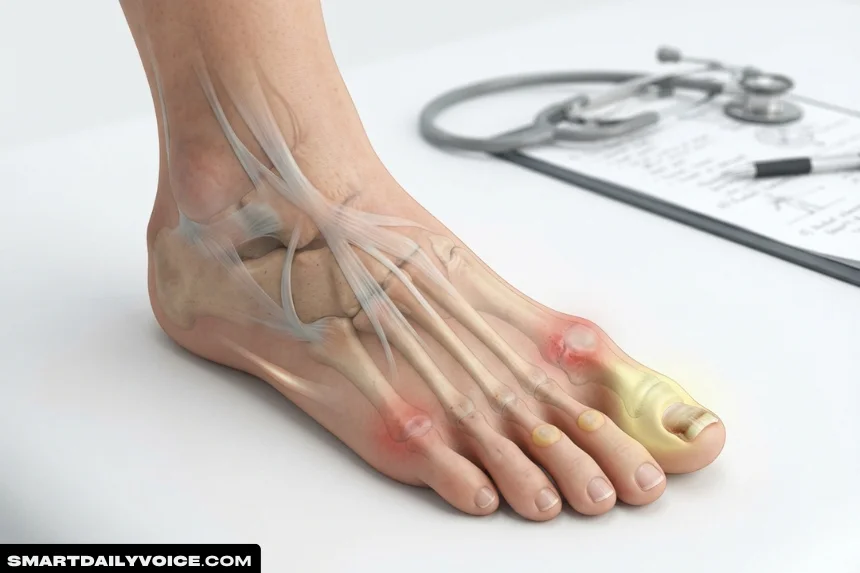
Seek advice sooner when you have diabetes, poor circulation, reduced foot sensation or a weakened immune system. These conditions increase the consequences of unnoticed wounds and foot infections.
When Does a Toenail Problem Need Urgent Care?
Toenail fungus rarely creates an emergency by itself. However, obtain prompt medical care if you develop:
- Rapidly spreading redness
- Significant warmth or swelling
- Pus or drainage
- Severe or rapidly worsening pain
- Red streaks moving up the foot
- Fever or chills
- A new wound or ulcer
- Black tissue
- Difficulty walking
- Signs of infection in a person with diabetes or poor circulation
These findings may indicate a bacterial skin or soft-tissue infection rather than uncomplicated nail fungus.
Frequently Asked Questions
What is the most effective toenail fungus home remedy?
The best at-home approach combines regular trimming, gentle filing, dry feet, clean socks, treated footwear and an evidence-based antifungal nail medicine. Household substances alone rarely cure established fungus.
Can toenail fungus go away on its own?
It may remain mild for a long time, but established nail fungus usually persists without effective treatment and may spread to other nails. Mild, painless infections do not always require treatment, although prevention and monitoring remain important.
What kills toenail fungus fastest?
No safe home method clears it quickly. Oral prescription antifungals generally work faster than nail lacquers, but they require medical assessment and may need liver testing. Even after the infection clears, the toenail can take a year or longer to grow out.
Can over-the-counter athlete’s foot cream treat a toenail?
Usually not. Standard terbinafine skin cream can treat athlete’s foot but does not penetrate an infected nail adequately. A separate nail treatment may be necessary.
Does tea tree oil cure toenail fungus?
Small studies suggest possible benefit, but current evidence remains insufficient to call tea tree oil a dependable cure. It can also irritate the skin.
Does Vicks cure toenail fungus?
A few small studies reported improvement, but researchers have not established mentholated ointment as a reliable antifungal cure.
Can apple cider vinegar remove toenail fungus?
Clinical evidence does not show that apple cider vinegar reliably eliminates an established nail infection. Concentrated or prolonged skin exposure may also cause irritation or burns.
Can I cut off the infected part?
You can trim loose or overgrown nail carefully, but cutting cannot remove fungi that remain deeper in the nail and nail bed. Do not cut into attached or painful tissue.
Should I cover a fungal toenail?
Avoid airtight coverings that trap moisture unless a clinician or medication label specifically requires one. Breathable socks and shoes generally provide a better environment for foot care.
Should I wear nail polish?
Cosmetic polish can hide changes, but it may make monitoring difficult and could interfere with a medicated lacquer. Follow the treatment label or ask a pharmacist before combining products.
How do I know treatment is working?
Look for healthy, clearer nail growing from the base. The damaged section will move toward the tip gradually as the nail grows.
Conclusion
No kitchen ingredient offers a fast, dependable cure for toenail fungus.
Tea tree oil, mentholated ointment and vinegar have produced limited results in small studies, but stronger research remains necessary. Meanwhile, bleach, concentrated peroxide and harsh acidic soaks can irritate or burn the skin.
A safer plan starts with short, carefully filed nails, clean and dry feet, breathable footwear, prompt athlete’s-foot treatment and a proven antifungal nail medicine when appropriate.
Because nail fungus develops and clears slowly, consistency matters more than aggressive treatment. Seek professional advice when the infection spreads, becomes painful, fails to improve or affects someone with diabetes, poor circulation or a weakened immune system.