





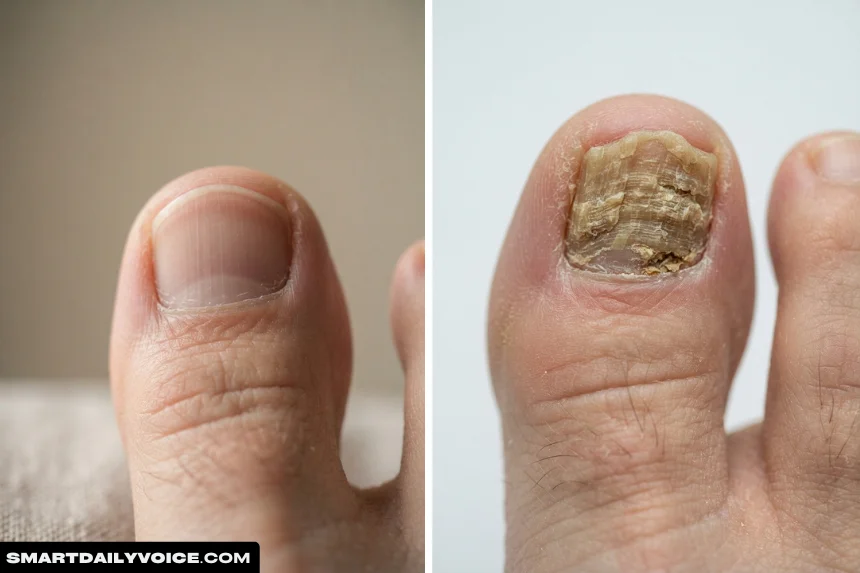
Ageing, fungal infections, injuries, repeated pressure from shoes and psoriasis commonly cause thick toenails. However, a thick or discoloured nail does not automatically mean that fungus has caused the problem.
The appearance can provide clues. For example, a fungal infection may make a nail yellow, crumbly and slow-growing. In contrast, an old injury may affect only one nail and produce a stable ridge or distorted shape. Psoriasis can cause pitting, lifting and a build-up beneath several nails.
Because these conditions can look similar, a GP, podiatrist or dermatologist may need to examine the nail and test a clipping before recommending treatment. Using an antifungal product without confirming the cause may waste time and allow another nail condition to progress.
What Does a Thick Toenail Mean?
A thick toenail develops when the nail plate grows abnormally, material builds up beneath it, or repeated damage changes the nail-producing tissue.
Doctors may use the term onychauxis for a thickened nail plate. Meanwhile, onychogryphosis describes a severely thickened, overgrown and curved nail that can resemble a ram’s horn.

Thick nails may also become:
- Yellow, white, brown or grey
- Hard or difficult to cut
- Brittle or crumbly
- Ridged or uneven
- Curved or distorted
- Loose from the nail bed
- Painful inside shoes
- Surrounded by debris
Although thick toenails often cause no pain, they may press against shoes or neighbouring toes as they grow longer. Therefore, even a harmless-looking nail can eventually interfere with walking or footwear.

The Most Common Causes of Thick Toenails
1. Ageing
Toenails commonly become harder and thicker with age. As nail growth slows, layers of nail cells can accumulate and produce a denser nail plate.
Ageing may affect several nails gradually. However, it does not explain every change in an older person’s nails. Fungus, footwear pressure, poor foot care and long-term injuries can develop at the same time.
A clinician should assess a nail that changes suddenly, causes pain or develops an unusual colour rather than assuming that age alone caused it.
2. Fungal nail infection
A fungal nail infection, medically called onychomycosis, often causes toenails to thicken. The infection usually begins near the tip or side of the nail and gradually moves towards its base.
Common signs include:
- Yellow, white or brown patches
- Crumbling or splitting at the tip
- Flaky material beneath the nail
- Slow nail growth
- Lifting from the nail bed
- A rough, misshapen appearance
- Pain or pressure inside shoes
Athlete’s foot can also spread from the surrounding skin into the toenails. In addition, fungi grow more easily in warm, damp conditions such as sweaty shoes, communal showers and changing rooms.
Nevertheless, appearance alone cannot confirm fungus. Psoriasis and previous injuries can produce very similar changes, so a clinician may send a nail clipping to a laboratory.
3. A previous toe injury
A single injury can damage the nail matrix, which produces the nail. For example, stubbing a toe, dropping an object on it or losing a nail after an accident may change how the new nail grows.
The resulting nail may become:
- Thicker than before
- Ridged
- Split
- Curved
- Permanently distorted
An injury often affects one nail, particularly the big toenail. However, the change may not become obvious until the nail grows out several months later.
4. Repeated pressure from shoes or sport
A person does not need one major accident to damage a toenail. Instead, repeated small impacts can gradually affect the nail matrix.
Common examples include:
- Shoes with a short or narrow toe box
- Long-distance running
- Hiking
- Football and other kicking sports
- Toes repeatedly hitting the front of a shoe
- Foot deformities that increase pressure on certain nails
This repeated pressure may cause thickening, bruising, lifting or distorted growth. Moreover, nail damage can make it easier for fungus to enter later.
Shoes should leave enough space for the toes to move without rubbing against the front or sides.
5. Nail psoriasis
Psoriasis can affect both fingernails and toenails. In some cases, nail symptoms appear even when the person has no obvious psoriasis patches on the skin.
Nail psoriasis may cause:
- Small dents or pits
- White, yellow or brown discolouration
- Crumbling
- Thick material beneath the nail
- Separation from the nail bed
- Ridges or grooves
- Small areas of bleeding beneath the nail
Because psoriasis can resemble a fungal infection, a dermatologist may test the nail before deciding on treatment. Some people also have both conditions at the same time.
Anyone with nail changes and painful, swollen or stiff joints should mention both problems to a healthcare professional because nail psoriasis can accompany psoriatic arthritis.
6. Onychogryphosis
Onychogryphosis causes a toenail to become extremely thick, hard, long and curved. It often affects the big toe.
Ageing, trauma, psoriasis and circulation problems may contribute to this nail deformity. In addition, difficulty reaching or cutting the toenails can allow the condition to worsen over time.
Do not try to cut a severely curved nail with ordinary scissors or forceful clipping. Instead, a podiatrist can reduce the thickness safely and check the surrounding skin.
7. Less common nail and health conditions
Less commonly, other skin diseases, medicines or underlying health conditions may change nail growth.
For example, yellow nail syndrome can cause several nails to become yellow, thick and slow-growing. It may also occur alongside leg swelling or respiratory problems. However, yellow nails more often result from fungal infection, staining or other common causes.
The NHS also notes that broader nail changes can sometimes accompany thyroid disorders, diabetes, anaemia or heart, lung and liver disease. These conditions do not usually cause one isolated thick toenail by themselves, so a clinician must consider the complete pattern of symptoms.
How to Tell What May Be Causing Your Thick Toenail
| Nail pattern | Possible cause | Other clues |
|---|---|---|
| Several nails thicken gradually with age | Age-related change | Slow progression and hard nails |
| Yellow, crumbly nail with debris underneath | Fungal infection | Athlete’s foot, spreading to other nails |
| One distorted nail after an accident | Trauma | Previous bruising, nail loss or toe injury |
| Thick nail after running or wearing tight shoes | Repeated pressure | Toe pain, rubbing or bruising |
| Pits, lifting and thick material beneath the nail | Psoriasis | Skin plaques or painful joints may also occur |
| Very thick, long and curved nail | Onychogryphosis | Often affects the big toe and becomes hard to cut |
| Multiple yellow nails that grow very slowly | Rare systemic condition | Leg swelling or breathing symptoms may occur |
This table can only provide clues. Therefore, do not rely on colour or thickness alone to diagnose fungus or another condition.
Does a Thick Toenail Always Mean Fungus?
No. Fungus commonly causes thick toenails, but age, injury, shoe pressure and psoriasis can create almost the same appearance.
A healthcare professional may take a nail clipping or scrape material from beneath the nail. A laboratory can then look for fungal organisms. Although testing may take several weeks, it can prevent unnecessary antifungal treatment.
Testing becomes particularly useful when:
- The diagnosis remains unclear
- Only one nail looks unusual
- Previous antifungal treatment failed
- Psoriasis may be present
- A doctor is considering antifungal tablets
- The nail has become badly distorted
Do not assume that a treatment failed because the nail remains thick immediately afterward. Toenails grow slowly, so a healthy-looking nail can take many months to replace damaged nail tissue.
How Do Healthcare Professionals Treat Thick Toenails?
Treatment depends on the underlying cause, the severity of the thickening and whether the nail causes pain.
Treatment for fungal toenails
A pharmacist may recommend an antifungal nail treatment for a mild infection. These products often require regular use for six to twelve months because the medicine must continue while healthy nail grows from the base.
A GP may consider antifungal tablets when:
- The infection has become severe
- Several nails have become affected
- Pharmacy treatment has failed
- The nail causes significant discomfort
Before prescribing tablets, the GP may test a nail sample. The patient may also need blood tests because some oral antifungal medicines can affect the liver and may not suit people with certain medical conditions.
Treatment after injury or repeated pressure
An antifungal medicine will not repair a nail that thickened because of trauma.
Instead, management may include:
- Changing to wider, better-fitting footwear
- Reducing pressure on the toe
- Trimming or filing the nail regularly
- Treating an underlying toe deformity
- Having a podiatrist reduce the nail’s thickness
A permanently damaged nail matrix may continue producing an abnormal nail. However, pressure relief can reduce pain and prevent further damage.
Treatment for nail psoriasis
A dermatologist may prescribe treatments that go onto the nail, injections around the nail or medicines that treat psoriasis throughout the body. The best approach depends on how many nails psoriasis affects and whether the person also has skin or joint symptoms.
Because nails grow slowly, treatment often takes at least six months to produce visible improvement.
Professional nail reduction
A podiatrist can use specialist equipment to reduce a thick nail safely. This treatment may improve comfort, make shoes easier to wear and reduce pressure on nearby toes.
However, thinning the nail does not cure an underlying fungal infection or psoriasis. Consequently, the nail may need ongoing care while the person also receives treatment for the cause.
How to Cut Thick Toenails Safely
Only cut a thick nail yourself when you can see and reach it safely and you have normal circulation and sensation in your feet.
Mayo Clinic recommends the following approach:
- Soften the nails. Soak the feet in warm water for five to ten minutes, unless a healthcare professional has advised you not to soak them.
- Dry the feet thoroughly. Pay particular attention to the spaces between the toes.
- Use nail nippers. These provide more control than ordinary nail scissors when the nail has become hard.
- Make small cuts. Begin at one corner and move slowly across the nail.
- Cut straight across. Do not cut deeply down the sides or round the corners.
- File sharp edges gently. This reduces catching and protects nearby skin.
Never:
- Tear the nail
- Force thick clippers through it
- Dig beneath it with a sharp object
- Cut into painful or bleeding skin
- Share nail tools
- Use the same uncleaned tool on healthy and infected nails
Clean the clippers after use and keep the feet dry, particularly when fungus may be present.
Who should avoid cutting thick nails at home?
Ask a podiatrist or another healthcare professional for help if you have:
- Diabetes
- Poor circulation
- Reduced feeling or numbness in the feet
- A history of foot ulcers
- A weakened immune system
- Tremors or limited hand control
- Poor eyesight
- Nails that you cannot reach
- A severely curved or painful nail
Sharp tools can cause an unnoticed cut, which may lead to infection in a high-risk foot.
Can You Prevent Thick Toenails?
You cannot prevent every age-related or inherited nail change. Nevertheless, you can reduce avoidable injury and fungal infection.
Helpful steps include:
- Wear shoes with a wide and deep toe box
- Keep toenails reasonably short
- Cut straight across rather than down the sides
- Change damp socks promptly
- Dry the feet carefully after washing
- Treat athlete’s foot early
- Wear sandals in communal showers
- Avoid sharing clippers, shoes or towels
- Disinfect reusable nail tools
- Check your feet regularly for colour, shape or skin changes
The NHS specifically advises keeping feet clean and dry, wearing well-fitting shoes and treating athlete’s foot before it spreads to the nails.
When Should You See a GP or Podiatrist?
Arrange an assessment when:
- The nail keeps becoming thicker
- You cannot cut it safely
- It causes pain when walking or wearing shoes
- The cause remains unclear
- The nail changes colour or shape without an obvious reason
- Several nails develop the same problem
- Pharmacy treatment for fungus has not worked
- The nail presses against or damages another toe
- You have diabetes or a weakened immune system
The NHS recommends seeing a podiatrist when nails become too tough to cut or you cannot reach them.
Seek prompt medical advice if the skin around the nail becomes red, hot, swollen or increasingly painful, particularly if you notice pus or feel unwell. These signs may indicate an infection.
You should also arrange a medical examination for a new brown or black band, pigment spreading onto the surrounding skin, a lump beneath the nail or unexplained nail splitting. Although nail melanoma remains rare, early assessment matters.
Frequently Asked Questions
What is the most common cause of thick toenails?
Age-related nail changes and fungal infections rank among the most common causes. However, injury and repeated pressure from footwear also frequently thicken toenails.
Why is only my big toenail thick?
The big toenail often receives the most pressure from shoes, walking and sport. A past injury may also damage its nail matrix. Nevertheless, fungus or psoriasis can begin in one nail, so seek an assessment if the cause remains unclear.
Can tight shoes cause thick toenails?
Yes. Tight or short shoes can repeatedly push the nail against the toe box. Over time, this pressure may damage the nail matrix and produce thicker or distorted growth.
Can thick toenails return to normal?
They may improve when treatment removes fungus, controls psoriasis or stops repeated pressure. However, a nail may remain abnormal when trauma or infection has permanently damaged the nail matrix.
Can I file down a thick toenail?
You can gently file a mildly thick nail when you can reach it safely and have normal sensation and circulation. Stop if filing causes pain, heat, bleeding or skin damage. A podiatrist should manage severe thickness or high-risk feet.
Does Vicks, vinegar or tea tree oil cure thick toenails?
Evidence does not support these products as reliable treatments for every thick nail or confirmed fungal infection. Furthermore, thickening may have a non-fungal cause. Ask a pharmacist or clinician about treatments with established dosing and safety guidance.
Will a fungal toenail heal without treatment?
Fungal nail infections usually do not clear by themselves. However, not every mild infection requires active treatment when it causes no pain or practical problems. Discuss the benefits and risks with a pharmacist, GP or podiatrist.
How long does a thick toenail take to improve?
Toenails grow slowly. Therefore, even successful treatment may require many months before healthy nail replaces the damaged portion. Antifungal nail treatments commonly require six to twelve months of use.
Conclusion
Ageing, fungal infection, injury, repeated shoe pressure and psoriasis commonly cause thick toenails. However, the same appearance can result from several different conditions.
Check whether the nail has changed colour, started crumbling, lifted from the nail bed or become painful. In addition, consider previous injuries, footwear and any history of psoriasis or athlete’s foot.
A pharmacist can advise on suspected mild fungus, while a GP, podiatrist or dermatologist can investigate uncertain, painful or severely thickened nails. Most importantly, seek professional help rather than forcing clippers through a nail that you cannot trim safely.
Discover more on our website about tonsillitis vs strep throat