





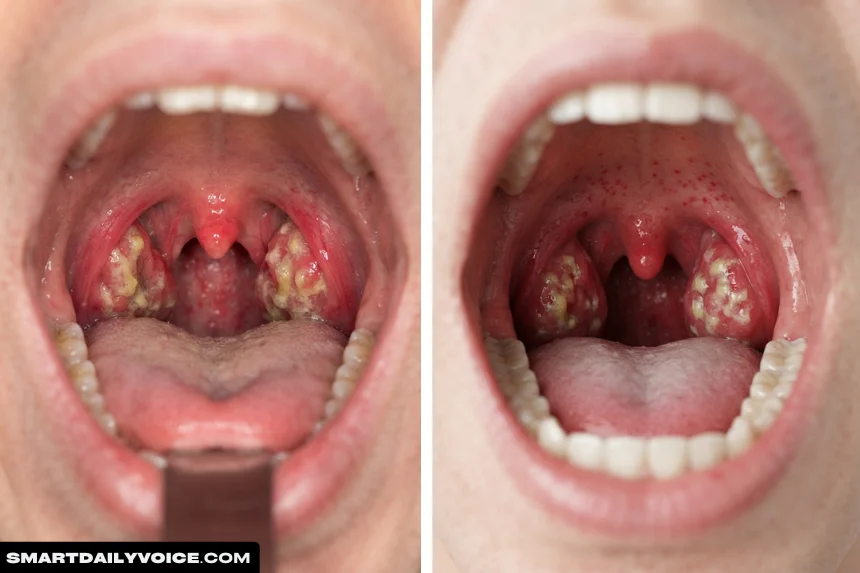
Tonsillitis and strep throat can both cause painful swallowing, swollen tonsils, fever and white patches at the back of the throat. The important difference is what each term describes. Tonsillitis means the tonsils are inflamed and can be caused by viruses or bacteria. Strep throat is a specific bacterial infection caused by group A Streptococcus, also called group A strep.
Because strep throat can inflame the tonsils, a person may have strep throat and tonsillitis at the same time. However, not every case of tonsillitis is strep throat. Viral infections are a common cause of sore throats, and antibiotics do not treat viruses.
Symptoms can offer clues, but appearance alone cannot reliably confirm strep throat when obvious viral symptoms are absent. A rapid strep test or throat culture may be needed before treatment is prescribed.
Medical note: This guide provides general information and is not a diagnosis. Contact a qualified healthcare professional for advice about your symptoms, medicines or a child’s illness.
What Is the Difference Between Tonsillitis and Strep Throat?
Tonsillitis is inflammation of the tonsils, the two pads of tissue located toward the back of the throat. It describes where the inflammation occurs rather than identifying one particular germ.
Strep throat, medically known as group A streptococcal pharyngitis, is an infection of the throat caused by Streptococcus pyogenes. It frequently affects the tonsils but may also inflame other parts of the throat.

The conditions therefore overlap:
- A virus can cause tonsillitis without strep throat.
- A bacterium other than group A strep can sometimes cause tonsillitis.
- Group A strep can cause both strep throat and inflamed tonsils.
- A person can have strep throat even when tonsil swelling is not the most noticeable symptom.
Tonsillitis vs Strep Throat at a Glance
| Feature | Tonsillitis | Strep throat |
|---|---|---|
| What it is | Inflammation of the tonsils | A bacterial infection of the throat |
| Possible causes | Viruses or bacteria | Group A Streptococcus bacteria |
| Common symptoms | Sore throat, swollen tonsils, painful swallowing and fever | Sudden sore throat, fever, painful swallowing and swollen neck glands |
| Cough or runny nose | More likely when a respiratory virus is responsible | Usually absent |
| White patches | May occur | May occur |
| How it is diagnosed | Symptoms and examination; testing may be needed to identify the cause | Rapid strep test or throat culture |
| Antibiotics | Only when an appropriate bacterial infection is diagnosed | Usually prescribed after a positive test |
| Contagiousness | Depends on the underlying virus or bacterium | Contagious and spread through respiratory droplets or direct contact |
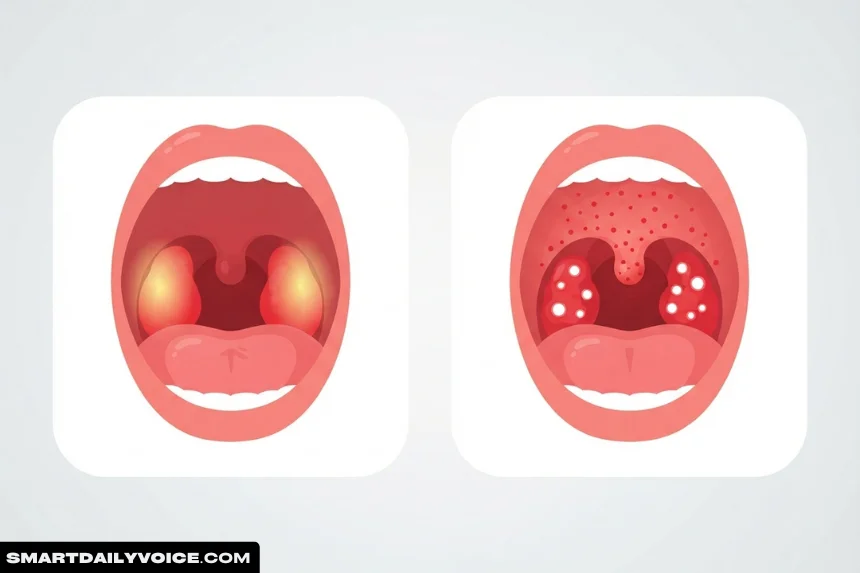
The presence of white patches, redness or swollen tonsils does not by itself distinguish strep throat from viral tonsillitis. CDC guidance states that clinicians cannot reliably separate viral pharyngitis from group A strep by examination alone when clear viral symptoms are absent.
Tonsillitis Symptoms
Tonsillitis commonly causes a sore throat and visibly red or enlarged tonsils. Symptoms vary according to the underlying infection and the person’s age.
More Read

Possible symptoms include:
- Sore or scratchy throat
- Pain when swallowing
- Red, enlarged tonsils
- White or yellow patches on the tonsils
- Fever
- Tender or swollen glands in the neck
- Bad breath
- Headache
- Tiredness
- Reduced appetite
- A change in the voice
When a respiratory virus is responsible, the person may also have a cough, runny nose, hoarse voice or other cold-like symptoms. Viruses are the most common cause of acute pharyngitis across age groups, although throat inflammation can have several bacterial causes as well.
Strep Throat Symptoms
Strep throat often begins more suddenly than a typical viral sore throat. Common signs include:
- A sore throat that starts quickly
- Fever
- Pain when swallowing
- Red and swollen tonsils
- White patches or streaks of pus on the tonsils
- Tender, swollen lymph nodes at the front of the neck
- Tiny red spots on the roof of the mouth
Children may also experience headache, stomach pain, nausea or vomiting. A rough, red rash may indicate scarlet fever, another illness caused by group A strep bacteria.
Cough, a runny nose, hoarseness, mouth ulcers and conjunctivitis are more suggestive of a viral infection than classic strep throat. Their presence does not identify the exact virus, but it may make group A strep less likely.
Can You Tell by Looking at the Tonsils?
You generally cannot confirm strep throat simply by looking in a mirror. Both viral tonsillitis and strep throat can produce:
- Red tonsils
- Significant swelling
- White spots or pus
- Painful swallowing
- Enlarged neck glands
- Fever
White patches are therefore not proof that antibiotics are needed. A clinician may recognize clear signs of a viral respiratory infection without testing for strep. When viral signs are not present, however, a rapid test or throat culture may be required because the physical examination alone is not reliable enough.
Avoid trying to scrape or remove white patches from the tonsils. Doing so can irritate the tissue and will not treat the underlying infection.
How Doctors Diagnose Tonsillitis and Strep Throat
A healthcare professional will usually ask when the symptoms began and whether the person has a cough, runny nose, fever, rash or recent exposure to someone with strep throat. The examination may include the tonsils, throat, ears and lymph nodes in the neck.
Rapid Strep Test
A rapid antigen detection test involves rubbing a swab across the throat and tonsil area. It can produce a result quickly and has high specificity, although its ability to detect every infection varies.
A positive rapid test generally confirms group A strep and allows treatment to begin.
Throat Culture
A throat culture also uses a swab but allows a laboratory to check whether group A strep bacteria grow from the sample. It takes longer than a rapid test but may detect infections that the rapid test misses.
Under current CDC guidance, children older than three years should generally receive a throat culture after a negative rapid test when strep is suspected. A follow-up culture after a negative rapid test is not routinely required for most adults because acute rheumatic fever is very rare in this age group. Local clinical practice may vary.
Tonsillitis vs Strep Throat Treatment
Treatment depends on the cause rather than how red or swollen the tonsils appear.
Treating Viral Tonsillitis
Antibiotics do not work against viral tonsillitis. Most uncomplicated viral sore throats improve with time and supportive care.
Measures that may ease symptoms include:
- Drinking enough water and other fluids
- Choosing cool drinks, warm drinks or soft foods according to comfort
- Resting
- Gargling with warm salt water when age-appropriate
- Using throat lozenges when they can be taken safely
- Avoiding cigarette smoke and other throat irritants
- Taking an appropriate over-the-counter pain reliever as directed
Children and teenagers should not take aspirin for a viral illness unless a clinician has specifically instructed them to do so. Ask a pharmacist or healthcare professional which medicines and doses are suitable, particularly for children, pregnancy, existing health conditions or interactions with other medicines.
Acute sore throats often last around one week, and most people recover without antibiotics.
Treating Strep Throat
People with a positive rapid test or throat culture are usually treated with antibiotics. Penicillin or amoxicillin is commonly recommended, while different medicines may be considered for people with allergies or other clinical needs.
Appropriate antibiotic treatment can:
- Shorten the duration of symptoms
- Reduce transmission to close contacts
- Lower the risk of certain complications
Take antibiotics exactly as prescribed and complete the course unless the prescribing clinician tells you otherwise. Antibiotics should not be used for a negative culture or an illness identified as viral.
Contact the treating healthcare professional if symptoms are not beginning to improve after approximately 48 hours of antibiotics, or if they worsen at any time.
Is Tonsillitis or Strep Throat Contagious?
Tonsillitis itself is inflammation, so its contagiousness depends on what caused it. Viral and bacterial infections responsible for tonsillitis can often pass between people.
Group A strep is contagious. It generally spreads through respiratory droplets or direct contact with saliva and other secretions. Household members, classmates and others in close contact may therefore be exposed.
Ways to reduce transmission include:
- Washing hands regularly with soap and water
- Covering coughs and sneezes
- Avoiding the sharing of drinking glasses, utensils or bites of food
- Washing dishes after use
- Staying home while feverish
- Following medical advice about returning to work, school or childcare
A person being treated for confirmed strep throat should generally stay home until the fever has gone and at least 12 to 24 hours have passed since starting an appropriate antibiotic. Follow the treating clinician’s advice and local school or workplace rules.
When to Contact a Healthcare Professional
Arrange medical advice when:
- A sore throat is severe or continues to worsen
- Symptoms do not begin improving within several days
- Fever is persistent or high
- Drinking is difficult
- Signs of dehydration appear, such as reduced urination or unusual drowsiness
- There is a sandpaper-like rash
- Symptoms repeatedly return
- A child appears significantly unwell
- There has been close exposure to confirmed strep throat
- Symptoms do not improve after 48 hours of prescribed antibiotics
People with weakened immune systems or serious underlying medical conditions may need earlier assessment.
When a Sore Throat Is an Emergency
Seek emergency medical help for:
- Difficulty breathing
- Inability to swallow saliva or fluids
- Drooling because swallowing is impossible
- Swelling inside the mouth or throat
- Difficulty speaking
- Difficulty opening the mouth
- A severe sore throat that becomes worse quickly
These symptoms can occur with a peritonsillar abscess, sometimes called quinsy, or another condition that could affect the airway.
Possible Complications
Most sore throats resolve without serious problems. Complications of group A strep pharyngitis are uncommon but can occur, particularly following an untreated infection.
Potential complications include:
- A peritonsillar abscess
- Infection of nearby lymph nodes or deeper throat tissues
- Acute rheumatic fever
- Post-streptococcal kidney inflammation
These complications are not a reason to take antibiotics without an appropriate assessment. They are a reason to seek medical advice when strep throat is suspected and to follow the prescribed treatment after a confirmed diagnosis.
Can Recurrent Tonsillitis Require Surgery?
An ear, nose and throat specialist may consider tonsil removal for selected people with severe or frequently recurring tonsillitis. The decision is not based on one ordinary sore throat. Clinicians consider factors such as:
- How often documented episodes occur
- How severe the episodes are
- Whether they interfere with school, work, sleep or normal activities
- Whether complications have occurred
- The likely benefits and risks of surgery
Criteria and treatment pathways differ between healthcare systems. Recurrent symptoms should be documented and discussed with a primary-care clinician or ENT specialist rather than managed repeatedly with leftover antibiotics.
Frequently Asked Questions
Can strep throat cause tonsillitis?
Yes. Group A strep can infect the throat and inflame the tonsils, so a person may have strep throat and tonsillitis simultaneously. Tonsillitis can also be caused by viruses or other bacteria.
Which is worse, tonsillitis or strep throat?
Neither term automatically describes a more severe illness. Tonsillitis may be mild or severe depending on its cause, while strep throat ranges from uncomfortable to occasionally complicated. Breathing difficulty, inability to swallow and rapidly worsening symptoms matter more than the label.
Do white spots mean strep throat?
No. White spots or pus can occur with strep throat, viral tonsillitis and other infections. Testing may be needed when strep is suspected.
Does tonsillitis need antibiotics?
Not usually when a virus is responsible. Antibiotics are used only for appropriate bacterial infections. Taking them for viral tonsillitis will not treat the illness and can cause unnecessary side effects.
Can you have strep throat without tonsils?
Yes. Removing the tonsils does not remove the rest of the throat tissue, so group A strep can still cause pharyngitis after a tonsillectomy.
Is a cough common with strep throat?
A cough is more consistent with a viral infection and is not typical of classic group A strep pharyngitis. However, symptoms alone should not be used to confirm or completely exclude strep when medical assessment is needed.
How long should someone with strep throat stay home?
Current CDC guidance recommends staying home until the person no longer has a fever and has taken an appropriate antibiotic for at least 12 to 24 hours. Local rules and individual medical advice may differ.
Conclusion
Tonsillitis means that the tonsils are inflamed, while strep throat is a specific bacterial infection caused by group A strep. The conditions can look almost identical, and strep throat can cause tonsillitis.
A cough, runny nose or hoarse voice makes a viral infection more likely, while a sudden sore throat, fever and tender neck glands are more typical of strep. These clues cannot always provide a firm diagnosis. When strep throat is suspected, testing helps determine whether antibiotics are appropriate.
Seek urgent help for breathing problems, an inability to swallow, mouth or throat swelling, difficulty speaking or symptoms that deteriorate quickly.
Discover more on our website about jeff gannon johnny gosch