





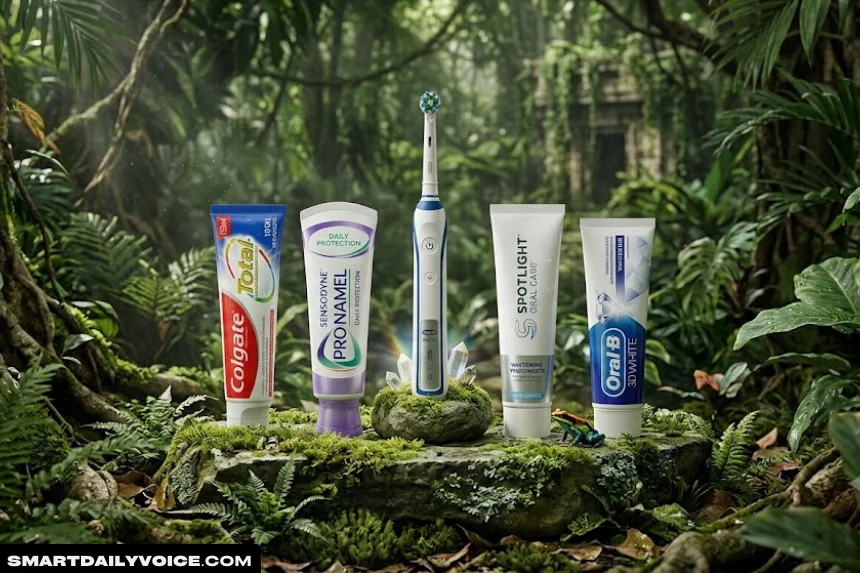
The best whitening toothpaste should make your teeth look brighter without replacing the fluoride protection needed for everyday oral health. However, the right choice depends on why your teeth appear discoloured.
Most whitening toothpastes work by polishing away surface stains caused by tea, coffee, red wine, tobacco and strongly coloured foods. Some formulas also contain stain-lifting or low-strength bleaching ingredients, but shop-bought toothpaste usually cannot change the natural colour of teeth as dramatically as dentist-supervised whitening.
For most adults, a sensible choice contains 1,350–1,500 parts per million of fluoride, provides a whitening method suited to their teeth and does not cause persistent sensitivity. This guide compares current UK options for everyday staining, sensitive teeth, enamel protection and more intensive stain removal.
This article provides general oral-health information. Speak with a dentist before whitening if you have cavities, gum disease, severe sensitivity, enamel erosion or unexplained tooth discolouration.
The Best Whitening Toothpastes at a Glance
| Product | Best suited to | Whitening approach | Important consideration |
|---|---|---|---|
| Colgate Max White Ultra Active Foam | Food and drink stains | Active-oxygen stain lifting | May feel intense on sensitive teeth |
| Sensodyne Pronamel Active Enamel Shield Whitening | Sensitive or erosion-prone teeth | Gentle stain removal with enamel support | Results may be gradual |
| Oral-B Pro 3D White Clinical Intensive Whitening | Everyday stain removal | Ionic stain-loosening technology | Mainly targets external staining |
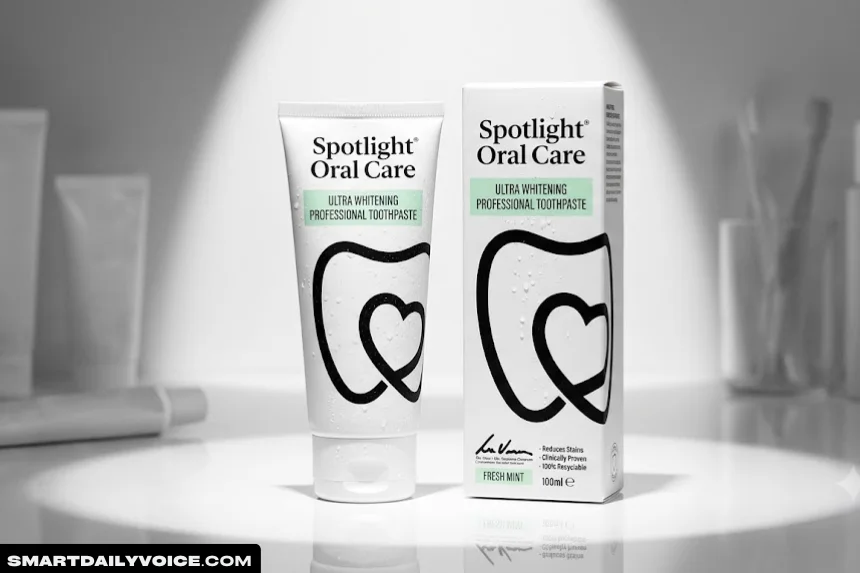
| Spotlight Ultra Whitening Professional Toothpaste | Adults wanting a peroxide formula | Hydrogen peroxide, silica and stain-control ingredients | Adult use only; discontinue if irritation occurs |
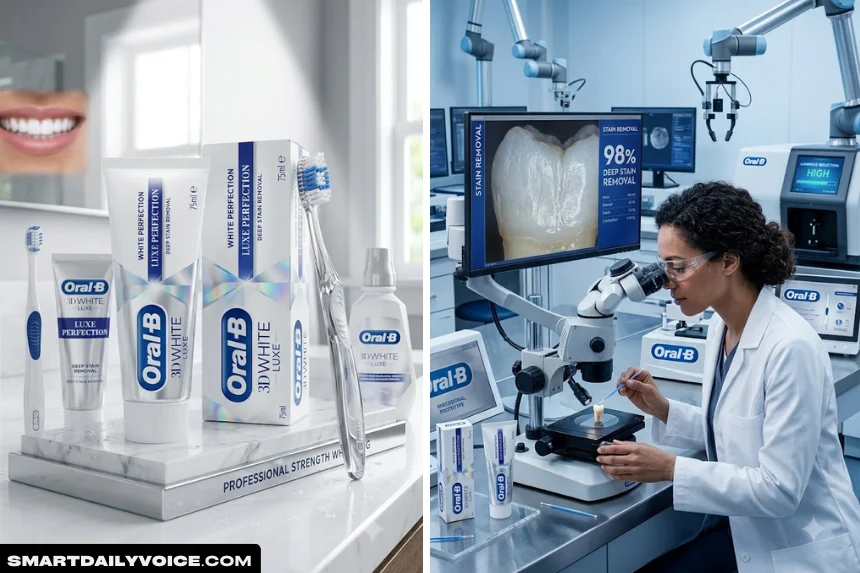
| Oral-B 3D White Luxe Perfection | Affordable stain maintenance | Polishing and stain-prevention ingredients | Unlikely to alter deep internal discolouration |
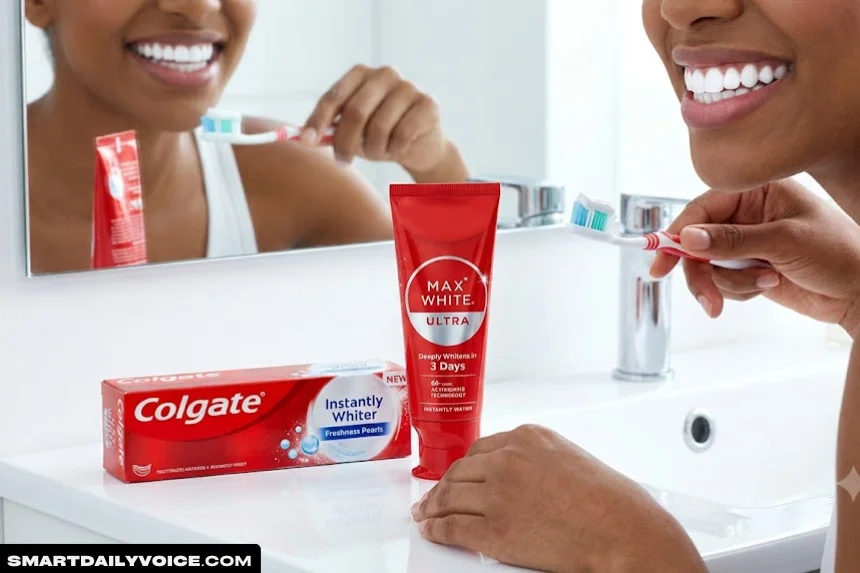
1. Colgate Max White Ultra Active Foam
Best for noticeable food and drink stains

Colgate Max White Ultra Active Foam is a practical choice for adults whose main concern is staining from coffee, tea, wine or strongly coloured foods. Colgate describes the formula as using active-oxygen technology to target surface and deeper food-and-drink stains without relying on abrasive polishing.
The toothpaste produces a rich, warming foam, which may appeal to people who prefer a more intensive whitening experience. However, the sensation and whitening ingredients may feel uncomfortable if your teeth are already sensitive.
Why it may suit you
- Targets stains associated with food and drinks
- Does not depend entirely on abrasive stain removal
- Designed to fit into normal daily brushing
- Available through major UK pharmacies and supermarkets
What to consider
Claims such as “whiter teeth in three days” are manufacturer comparisons against an ordinary fluoride toothpaste and relate to stains caused by food and drinks. Individual results will depend on the type and severity of discolouration.
Stop using it and speak with a dentist if you develop persistent sensitivity, gum soreness or another uncomfortable reaction.
2. Sensodyne Pronamel Active Enamel Shield Whitening
Best whitening toothpaste for sensitive teeth
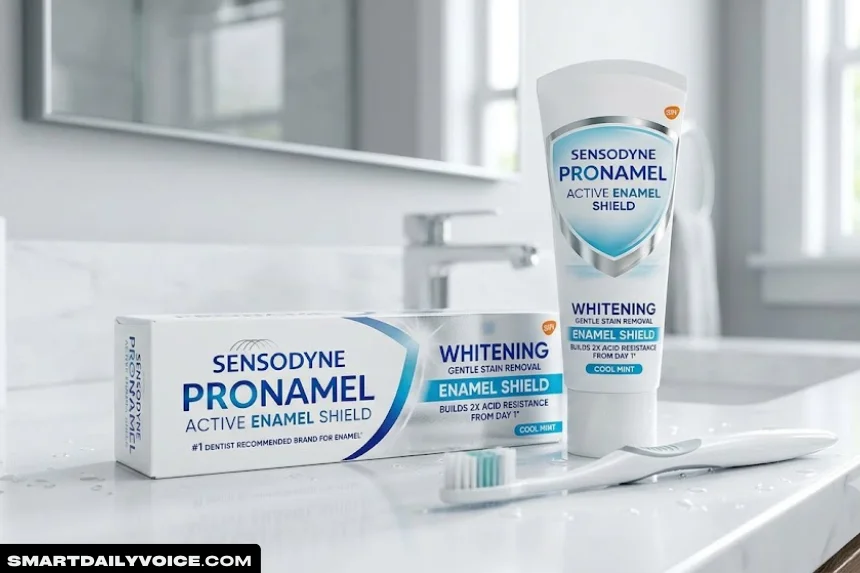
Sensodyne Pronamel Active Enamel Shield Whitening is a better starting point for people who want gentle stain removal while prioritising enamel and sensitivity care.
The manufacturer says the formula helps increase enamel resistance to dietary acids when used twice daily. It also provides cavity protection and a whitening action intended to remove staining gradually.
This product may be particularly relevant if you regularly consume acidic drinks, experience occasional sensitivity or have previously found intensive whitening toothpastes uncomfortable.
Why it may suit you
- Developed for enamel protection
- Suitable for regular twice-daily brushing
- Offers gradual whitening rather than an aggressive polishing sensation
- Supports cavity protection
What to consider
A gentler toothpaste may take longer to produce a visible improvement. It is more suitable for maintaining a naturally brighter appearance than attempting a dramatic shade change.
Sensitivity can also be caused by tooth decay, cracked teeth, gum recession or enamel damage. Arrange a dental examination when sensitivity is new, severe or limited to one tooth.
3. Oral-B Pro 3D White Clinical Intensive Whitening
Best all-round whitening toothpaste
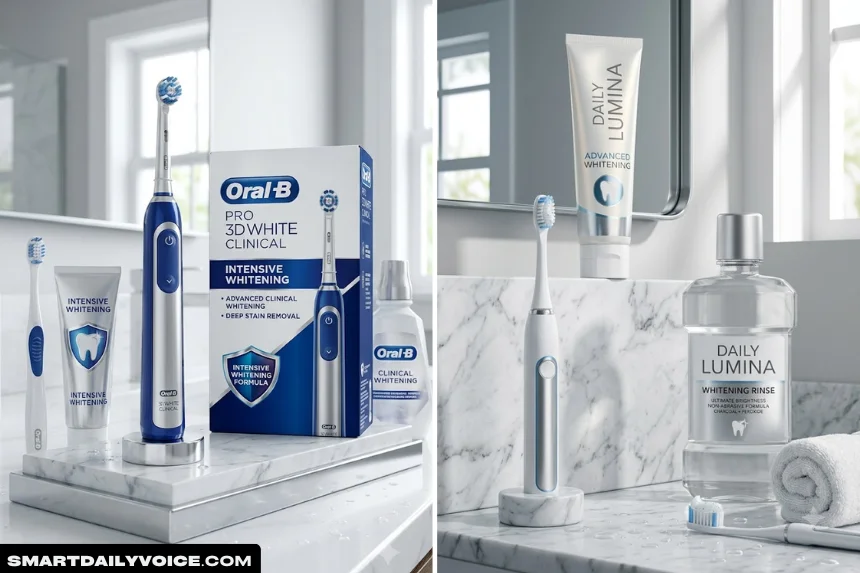
Oral-B Pro 3D White Clinical Intensive Whitening combines surface-stain removal with everyday fluoride protection. The UK formula contains 1,450 ppm fluoride, placing it within the fluoride range generally recommended for adult toothpaste.
Oral-B describes its ionic technology as loosening stains rather than depending only on abrasive scrubbing. It is designed to remove existing surface stains and help limit new staining.
Why it may suit you
- Contains 1,450 ppm fluoride
- Targets surface staining
- Helps protect against future stains
- Intended to be suitable for people with sensitive teeth
What to consider
Its whitening claim is based on removing external stains. It is unlikely to make a large difference to naturally darker teeth or discolouration located inside the tooth.
It is also generally positioned above standard toothpaste in price, so it may offer less value when your teeth have little visible surface staining.
4. Spotlight Ultra Whitening Professional Toothpaste
Best peroxide-containing whitening toothpaste
Spotlight Ultra Whitening Professional Toothpaste contains hydrogen peroxide alongside hydrated silica, sodium bicarbonate, stain-control ingredients and 1,450 ppm fluoride. Its label states that it is intended for adults and can be used twice daily.
Hydrogen peroxide is a bleaching ingredient used in professional teeth whitening. However, UK toothpastes sold directly to customers may contain or release less than 0.1% hydrogen peroxide. Stronger products containing between 0.1% and 6% are restricted to treatment involving registered dental professionals.
This means a peroxide toothpaste can support gradual brightening, but it should not be expected to reproduce the results of dentist-supervised bleaching.
Why it may suit you
- Includes hydrogen peroxide and stain-removal ingredients
- Contains 1,450 ppm fluoride
- Suitable for people seeking gradual daily whitening
- Larger tube than many standard UK toothpastes
What to consider
The product is labelled for adult use. Do not swallow it, and discontinue use if irritation develops.
Claims about sensitivity and whitening performance on a manufacturer’s page do not guarantee the same experience for every user.
5. Oral-B 3D White Luxe Perfection
Best for routine surface-stain maintenance
Oral-B 3D White Luxe Perfection is a straightforward option for people who want to control everyday staining without moving to a more specialised premium formula.
The toothpaste uses polishing ingredients to remove external stains and includes fluoride for enamel and cavity protection. The manufacturer states that its foaming action helps reach areas that may be harder to clean.
Why it may suit you
- Widely available in the UK
- Designed for routine surface-stain removal
- Contains fluoride
- Useful for maintaining results after a professional dental cleaning
What to consider
Polishing toothpaste cannot substantially change the colour beneath the enamel. It is best suited to mild staining rather than grey, brown or internally discoloured teeth.
Which Whitening Toothpaste Is Best for You?
The strongest formula is not necessarily the best choice. Select your toothpaste according to your main concern.
For tea, coffee or red-wine stains
Choose a fluoride toothpaste designed specifically to remove food-and-drink stains. Colgate Max White Ultra Active Foam or Oral-B Pro 3D White Clinical may be appropriate options.
These products can help with external staining, but they will not prevent stains from returning when staining drinks are consumed frequently.
For sensitive teeth
Begin with Sensodyne Pronamel Active Enamel Shield Whitening or another sensitivity-focused fluoride toothpaste. Avoid switching immediately to a highly abrasive or strongly flavoured formula.
Persistent sensitivity requires a dental assessment rather than repeated experimentation with different whitening products.
For enamel erosion concerns
Look for fluoride, gentle brushing instructions and a formula designed for enamel protection. Toothpaste cannot rebuild enamel that has been completely lost, but fluoride can help strengthen the remaining tooth surface.
Acidic drinks, reflux, frequent vomiting and aggressive brushing can contribute to enamel wear. A dentist can help identify the underlying cause.
For fast or dramatic whitening
Toothpaste is unlikely to deliver a major shade change. The Oral Health Foundation explains that shop-bought whitening products may remove some surface stains but usually do not significantly alter the natural colour of teeth.
For more noticeable whitening, review the NHS guidance on teeth whitening and arrange an assessment with a registered dentist. Dentist-provided treatment is the safest route because the dentist can first check for decay, gum disease and other problems.
How Whitening Toothpaste Works
Abrasive or polishing ingredients
Many whitening toothpastes contain hydrated silica, calcium carbonate, alumina or similar ingredients. These gently polish the tooth surface and lift external stains during brushing.
Abrasives are not automatically harmful. Their effect depends on the formula, brushing pressure, toothbrush and frequency of use. Problems are more likely when someone brushes aggressively or combines abrasive toothpaste with hard-bristled brushes and DIY whitening products.
Chemical stain-control ingredients
Polyphosphates and similar ingredients can help loosen staining or make it harder for new stains to adhere to teeth.
These ingredients are useful for maintenance, particularly for people who regularly drink tea or coffee, but they do not permanently prevent discolouration.
Peroxide
Hydrogen peroxide and carbamide peroxide can bleach coloured compounds within teeth. Dentist-supervised products use higher legally permitted concentrations than ordinary UK toothpaste and can therefore create a more noticeable colour change.
The General Dental Council’s position statement explains that products containing or releasing between 0.1% and 6% hydrogen peroxide must be supplied through appropriately registered dental professionals. Products exceeding 6% are prohibited for cosmetic whitening.
Optical brighteners and purple formulas
Purple products use colour correction to temporarily reduce the appearance of yellow tones. They can make teeth look brighter immediately, but the effect is mainly visual and temporary.
A purple serum or toothpaste should not replace regular brushing with an effective fluoride toothpaste unless the product itself contains a suitable amount of fluoride.
What to Look for in a Whitening Toothpaste
1,350–1,500 ppm fluoride
The Oral Health Foundation advises adults and children over three to use toothpaste containing 1,350–1,500 ppm fluoride. Fluoride strengthens enamel and helps protect against tooth decay.
Check the packaging rather than assuming that every cosmetic whitening product contains fluoride.
A realistic whitening method
Choose a formula suited to your type of staining:
- Polishing ingredients for mild surface stains
- Stain-control ingredients for maintenance
- Sensitivity-focused whitening for sensitive teeth
- Dentist-supervised peroxide treatment for a more significant shade change
Clear directions and warnings
Use toothpaste according to its label. Using more product, brushing harder or brushing more frequently will not necessarily whiten teeth faster.
Excess pressure can irritate gums and contribute to tooth wear, especially when the enamel or exposed roots are already vulnerable.
A formula you can use consistently
Strong flavour, grittiness, foaming and warming sensations can affect whether you continue using a product. A comfortable toothpaste used correctly twice daily is usually more useful than an intensive formula that causes you to skip brushing.
How to Use Whitening Toothpaste Safely
Brush twice a day for approximately two minutes using a soft-to-medium toothbrush and a pea-sized amount of fluoride toothpaste. Clean the front, back and chewing surfaces without applying excessive pressure.
After brushing:
- Spit out the toothpaste.
- Do not immediately rinse with water.
- Use mouthwash at a different time if needed.
- Clean between your teeth once daily.
- Stop using the whitening formula if it causes ongoing pain or irritation.
The Oral Health Foundation’s oral-care guidance recommends spitting rather than rinsing so fluoride remains on the teeth for longer.
Do not combine several whitening products unless a dentist has confirmed that the combination is suitable for you.
Can Whitening Toothpaste Damage Enamel?
A properly formulated whitening toothpaste used as directed should not automatically damage healthy enamel. The greater risk comes from overuse, excessive brushing pressure, unregulated products or abrasive home remedies.
Avoid brushing with lemon juice, undiluted peroxide, salt, charcoal powder or household bicarbonate mixtures. Acidic materials can soften enamel, while uncontrolled abrasive powders may increase wear.
Seek dental advice if you notice:
- Increasing sensitivity
- Pain when biting
- Gum recession
- Transparent tooth edges
- Cracks or chips
- Persistent gum irritation
- A single tooth becoming darker
Will Whitening Toothpaste Work on Crowns, Veneers or Fillings?
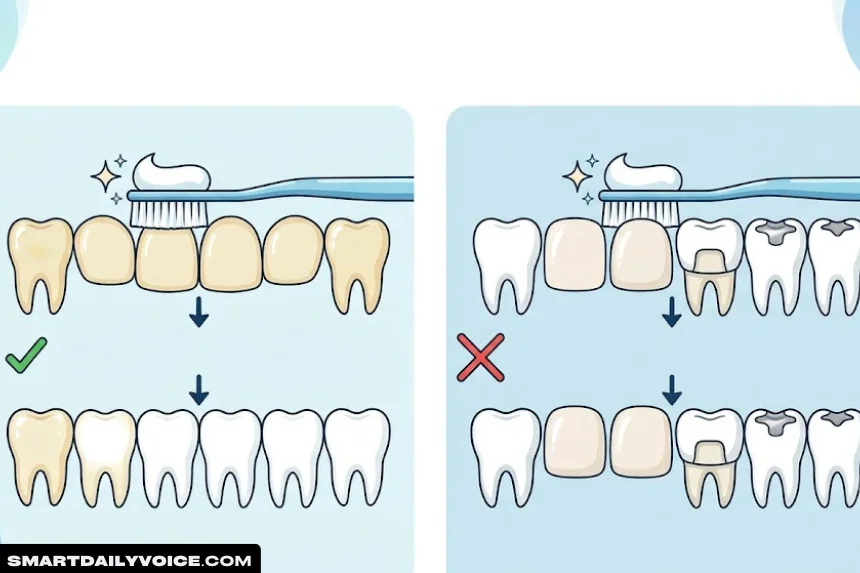
Whitening toothpaste may remove stains that have collected on the surface of a restoration, but it cannot bleach the material itself.
Crowns, veneers, composite bonding and tooth-coloured fillings will not respond like natural enamel. This can create an uneven appearance if the surrounding natural teeth become lighter.
Speak with a dentist before whitening when you have restorations on your visible front teeth.
Common Whitening Toothpaste Mistakes
Expecting professional whitening results
Toothpaste is mainly a stain-management product. It should not be marketed or understood as a direct substitute for dentist-supervised bleaching.
Brushing harder to whiten faster
Extra pressure does not create a safer or more even result. It can irritate the gums and wear vulnerable tooth surfaces.
Ignoring fluoride content
A cosmetic product that creates temporary brightness but provides no fluoride may not be suitable as your only daily toothpaste.
Using toothpaste on untreated dental problems
Whitening will not resolve decay, tartar, gum disease, cracked teeth or internal discolouration. These problems require professional diagnosis.
Buying unregulated whitening products online
Products from unknown sellers may not comply with UK peroxide limits or labelling requirements. The NHS advises that dentist-provided whitening is the safest option and warns that unsuitable kits may harm teeth and gums.
Frequently Asked Questions
What is the best whitening toothpaste in the UK?
Oral-B Pro 3D White Clinical is a strong all-round option because it combines surface-stain removal with 1,450 ppm fluoride. Sensodyne Pronamel Active Enamel Shield Whitening may be more appropriate for sensitive or erosion-prone teeth. No single toothpaste is ideal for everyone.
Do whitening toothpastes actually whiten teeth?
They can make teeth look whiter by removing external staining. Most cannot dramatically alter the natural underlying tooth shade. More substantial colour changes normally require dentist-supervised bleaching.
How long does whitening toothpaste take to work?
Some manufacturers advertise changes within a few days, while gentler products may require several weeks of consistent use. Results depend on the stain type, brushing technique and original tooth colour.
Is whitening toothpaste safe for daily use?
Many formulas are designed for twice-daily use. Follow the label and stop if you experience persistent sensitivity, pain or gum irritation. People with existing dental problems should seek professional advice first.
What is the best whitening toothpaste for sensitive teeth?
Sensodyne Pronamel Active Enamel Shield Whitening is designed to combine stain removal with enamel protection. However, sensitivity affecting one tooth or continuing despite sensitivity toothpaste should be checked by a dentist.
Does charcoal toothpaste whiten teeth?
Charcoal may remove some surface staining through abrasion, but evidence for meaningful bleaching is limited. Some charcoal products also lack adequate fluoride. A conventional fluoride whitening toothpaste is generally a more practical daily option.
Can yellow teeth become completely white with toothpaste?
It depends on why the teeth look yellow. Surface staining may improve, but naturally yellow dentine, enamel thinning and internal discolouration will not usually be corrected by toothpaste alone.
Conclusion
The best whitening toothpaste is one that removes the type of staining you have while continuing to protect your teeth with fluoride. Oral-B Pro 3D White Clinical is a balanced everyday option, Colgate Max White Ultra Active Foam focuses on food-and-drink stains, and Sensodyne Pronamel Active Enamel Shield Whitening is better suited to people concerned about sensitivity.
Expect gradual surface-stain improvement rather than a dramatic change in natural tooth colour. For significant whitening, unexplained discolouration or persistent sensitivity, arrange an examination with a registered dentist.